

The lowest-looking rate isn’t always the best guide to a property clearance bill. Comparing Clearabee pricing with dedicated estate clearance services means looking beyond the headline rate to the pricing method and work included. For a property in Newcastle, the contents, access and disposal needs all help shape the quote.
It’s reasonable to want a clear idea of the cost before arranging a clearance. This guide explains how rubbish removal prices are set, how pricing models differ and which details can affect a quote. The amount and type of contents, access and disposal requirements all help determine the figure for your case.
You’ll also see why a small load and an entire home are priced differently, and what to consider when comparing services for an estate or property clearance. The aim is to make the options easier to understand, so you can decide what kind of help fits the work involved.
Key Takeaways
- Compare the pricing method as well as the headline figure: a volume-based clearance quote and a fixed-size option measure the job differently.
- Describe the property contents, access and disposal needs clearly to help make a clearance quote more accurate.
- For estate work, look at whether the quote is based on a survey or a day rate, and what tasks it covers.
- Ask for specialist disposal costs to be itemised so you can see how they affect the total.
- Check whether VAT is included; HM Revenue & Customs states the UK standard VAT rate is 20%.
How much do rubbish removal services cost?
In Newcastle, a clearance quote depends on the contents, access and work involved. There isn’t one figure that applies to every property, so compare the scope and pricing method rather than relying on a headline rate.
Property size and hourly rates
Property size helps describe a job, but it doesn’t show how much needs removing. A one-bedroom flat with a few unwanted items differs from a four-bedroom house cleared of its contents. The volume, access and time needed to load and dispose of items all affect the work.
Rubbish removal rates vary between UK cities, and a city average isn’t a Newcastle quote. For a house clearance, focus on the complete job and the tasks included. Check whether the estimate covers loading and disposal, rather than treating an hourly rate as the likely total.
Reducing clearance costs
Sort items before the clearance and separate belongings the family wants to keep from those to remove. This gives the team a clearer picture of the volume and helps prevent wanted items being included by mistake. Reusable or recyclable belongings may also be handled differently from items requiring disposal.
Share an accurate inventory, photographs and details about stairs, parking and dismantling needs. Identify any hazardous materials when describing the job, as they must be agreed in advance before removal. These details help define the work. The price depends on the contents, access and disposal needs, and the exact figure is provided in a quote for your case.
Comparing quotes and reviews
Families can compare quotes by giving each service the same property details and asking for the work to be itemised. Check which rooms are covered and whether loading, disposal, dismantling and cleaning are included. Reviews can help assess communication, care with belongings and how clearly customers describe the completed work.
UK businesses collecting and disposing of waste should hold a valid waste carrier licence. This requirement applies to waste carriers generally, but doesn’t establish the registration status of a particular company. In England, householders can check a carrier’s licence number on the Environment Agency’s public register.
Estate clearance pricing and resale deductions
Some UK house clearance firms provide a fixed price after a survey, while others charge a day rate. A property walkthrough can show the contents, access and work more clearly than a short description. Ask for specialist disposal costs to be itemised when comparing quotes.
Probate valuations and resale deductions aren’t automatic parts of a clearance quote. Treat any proposed credit as a separate item, and ask for the items and deduction to be recorded in writing. A valuation is distinct from the physical work of clearing and disposing of unwanted belongings.
To arrange a probate or estate clearance, prepare the property address, an inventory or photographs, access details and a list of items to retain. Explain who is authorised to arrange the work and identify any hazardous materials. For most UK house clearances, the waste carrier should provide a Waste Transfer Note recording the waste transfer.
When reviewing a quote, check whether VAT is included. HM Revenue & Customs states that the UK standard VAT rate is 20%.
Volume-based versus fixed-size pricing
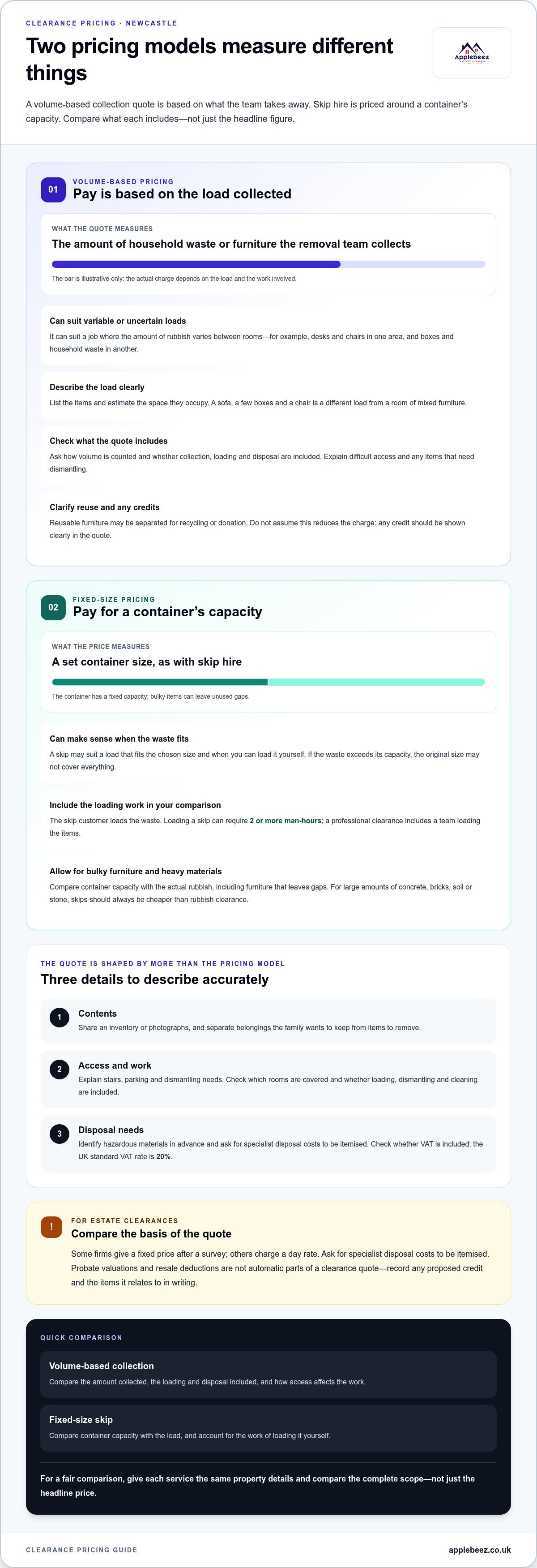
Rubbish removal charges can be based on the volume collected, while skip hire uses fixed-size pricing. The distinction matters when comparing a small household collection with a whole office or property clearance. If you’re weighing Clearabee pricing vs dedicated estate clearance services, first understand what each pricing method measures.
Volume-based pricing
A volume-based quote reflects how much household waste or furniture the removal team collects. Before comparing charges, list the unwanted items and estimate the space they occupy together. A sofa, a few boxes and a single chair make a different load from a room of mixed furniture.
Ask what the quote counts as volume and whether collection, loading and disposal are included. A waste removal service may take the items away rather than leave you to load them. Difficult access or items requiring dismantling can affect the work involved, so describe these clearly.
Volume pricing can suit jobs where the amount of rubbish is uncertain or varies between rooms. For example, an office might have desks and chairs in one area, then boxes and household waste in another. A clear inventory explains what the team will collect and reduces the chance of comparing unlike services.
Check how reusable items are treated. Furniture suitable for reuse may be separated for recycling or donation, while damaged items may need disposal. Don’t assume resale or donation automatically reduces charges; any credit should be shown clearly in the quote. This distinction can matter when comparing Clearabee pricing vs dedicated estate clearance services for a mixed load.
Fixed-size pricing
Fixed-size pricing sets a charge around a container’s capacity, as with skip hire. It can make sense when the waste fits the chosen skip size and you can load it yourself. If the load exceeds that capacity, the original size may not cover everything that needs removing.
Compare the container size with the actual rubbish, including bulky furniture that leaves unused gaps. The skip customer loads the waste, while professional clearance includes a team loading it. Loading a skip can require 2 or more man-hours, so include that labour when weighing the options.
Heavy materials change the comparison. For large amounts of concrete, bricks, soil or stone, skips should always be cheaper than rubbish clearance. For mixed items from a home or office, however, a container’s fixed capacity may be less useful than a collection priced by waste volume.
Use this comparison before choosing: list the items, note whether they are heavy or bulky, then match the load to the pricing method. Check whether the quote covers loading, collection, recycling and disposal. If the property needs a wider clearance rather than a single load, explore property clearance services as a relevant option.
Factors that affect clearance quotes
A clearance quote reflects more than the number of items in a property. Volume, labour, access and disposal requirements can all change the work involved.
Start with the contents. A room containing a few chairs and boxes takes a different effort from a packed bedroom with wardrobes, bed frames and loose belongings. Bulky furniture can take longer to move, especially if it needs dismantling before removal. Describe each room and any large items clearly.
Access affects how a team reaches and removes unwanted belongings. A ground-floor room beside the entrance differs from a top-floor flat with narrow stairs. Mention lifts, long carrying distances, restricted parking and shared entrances. These details help a removal service estimate the labour and handling required at the property.
Labour also depends on how much sorting, lifting and dismantling the job requires. A clear-out involving assembled furniture may need extra work compared with loose items ready for collection. If the property contains items that must stay, mark them clearly. This helps prevent delays and keeps the agreed scope focused.
Hazardous materials need particular attention. They must be agreed in advance before removal, so identify them when describing the job. Don’t mix them into a general household rubbish list. Their handling and disposal can require different arrangements from ordinary furniture, garden waste or household items.
Garden contents can add another type of waste to a property clearance. For example, a quote for indoor furniture alone won’t describe a job that also includes discarded outdoor items. List the areas to clear, including sheds and outbuildings, so the expected volume and work are easier to assess.
A property walkthrough can produce a more accurate figure than a phone estimate because it shows the contents and access directly. Use the visit to point out heavy items, difficult routes and anything requiring dismantling. Large UK house clearances may take a full day or longer, depending on their scale and contents.
Separate disposal needs can also affect the quote. Ask for specialist disposal costs to be itemised rather than hidden in a single total. This makes it easier to see which items need specific treatment and compare the same work across quotes. If the property needs cleaning after removal, describe that as a separate task.
Before accepting a quote, check that it covers the rooms, garden areas and items you expect removed. Confirm how the team will handle hazardous materials, dismantling and disposal. Clear details help residents understand what the estimate includes and reduce the chance of different expectations on collection day.
How do dedicated UK probate and estate clearance firms price their services?
Dedicated estate clearance quotes usually reflect the property, its contents and the work requested. Some UK house clearance firms provide a fixed price after a survey, while others charge a day rate. These methods can produce different totals, so compare the scope of work alongside the pricing basis.
A survey lets the firm view the rooms, contents and access before setting a fixed quote. Walk through each area and point out items to remove, belongings to retain and furniture needing dismantling. Include lofts, sheds and gardens in the discussion. Seeing the whole property helps define what the quoted work covers.
A day rate is based on the time spent carrying out the clearance. Ask what activities the rate covers, such as sorting, loading, dismantling or separating reusable items. For example, a property with many loose items may need a different amount of labour from one with bulky furniture. Clarify how additional work is treated before agreeing the scope.
Estate work can involve decisions beyond removing contents. Families may need to identify important papers, personal possessions and items intended for relatives before clearance begins. Make a written keep-list and mark items clearly. This gives the team practical instructions and helps prevent wanted belongings being included with items for removal.
Ask for a written breakdown of the work, including rooms covered, waste removal and any specialist disposal. When comparing quotes, ask for specialist disposal costs to be itemised separately. This makes it easier to distinguish the main clearance from charges for particular items, rather than relying on a single unexplained total.
Some families also ask about valuations or resale deductions for belongings. Treat these as separate parts of the arrangement, not as an assumed reduction to the clearance charge. If a firm proposes a valuation or credit, ask for the items, valuation basis and deduction to be recorded clearly in writing.
Compare quotes on the same basis. Give each firm the same inventory, access details and list of requested tasks, then check whether each quote uses a survey-based fixed price or a day rate. Ask what happens if the contents differ from the original description or extra work becomes necessary during the clearance.
Before work starts, confirm who can approve decisions about the estate and which belongings must remain. Share access arrangements and any known disposal requirements. A clear written scope, agreed pricing method and itemised costs make it easier for families to understand the arrangement and discuss changes calmly.
What is included in Clearabee's house clearance quote compared with specialist estate clearance?
A Clearabee house clearance quote and a specialist estate clearance quote are easiest to compare when you match the work, not just the totals. The service name alone doesn’t tell you whether sorting, dismantling, loading, specialist disposal or cleaning is included.
Start with the property and the clearance scope. Record each room, the items to remove and anything the family needs to keep. Include lofts, sheds and gardens where relevant. This gives both quotes the same starting point, whether the job involves a few bulky belongings or a whole property.
Then compare what each quote says about the work. Check the areas covered, items included, loading and removal, and tasks such as dismantling furniture. If one quote covers only listed items and another covers a broader clearance, their totals won’t represent the same service.
Pay close attention to specialist disposal. UK clearance customers should ask for those costs to be itemised separately. A fridge, hazardous material or another item requiring special handling may affect the total differently from ordinary household contents. A separate line makes the reason for the charge easier to understand.
Estate clearance can also involve sorting belongings and identifying items that must remain. Tell the firm which possessions are to be retained, and put that instruction in writing. If a quote includes a survey or a day rate, compare that pricing method with any fixed quote, along with the tasks each covers.
Cleaning is another difference in scope to look for. Removing contents and cleaning are distinct tasks, so don’t assume that a cleared room will also be cleaned. If you need cleaning after the clearance, make sure the quote describes it separately and identifies the areas involved.
The exact figure depends on the amount and type of contents, access, labour and disposal needs, and is provided in a quote for your case. To compare fairly, put both quotes beside the same inventory and check for exclusions, additional work and separate disposal charges. Ask for any unclear line to be explained in plain terms.
For a property clearance that also needs cleaning, discuss house clearance and cleaning as part of the work required.
UK consumers are advised to contact at least 2-3 house clearance companies for quotes. These estimates can help set expectations, but the quote should still reflect the property and agreed work.
Check whether disposal costs are included in the quoted total or listed separately, and compare the charges against the items in your inventory.
Applebeez: House Clearance Service
Applebeez provides a House Clearance Service to remove unwanted contents from properties. If the clearance follows a bereavement, its Probate Clearance Service offers compassionate support with estate contents, while its Cleaning service can address cleaning needs separately. For an office or other commercial property, Applebeez also provides a Business Clearance Service.
Before requesting a quote, note which rooms need clearing, what must remain and whether cleaning is also needed. These details explain the work involved and help you discuss the right service for the property. Applebeez provides clearance and cleaning services in Sunderland, Newcastle, Stockton-on-Tees, Middlesbrough, Darlington and Durham.
Contact Applebeez to discuss your property clearance, or visit applebeez.co.uk.
Choose the next step that fits your property
Before arranging a clearance, decide what outcome matters most: removing contents, preparing a working space or leaving rooms ready for cleaning. That practical aim can guide your choice more clearly than comparing provider names alone. Clearabee pricing versus dedicated estate clearance services is useful context, but the right option still depends on the work your property needs.
For properties in Sunderland, Newcastle, Stockton-on-Tees, Middlesbrough, Darlington and Durham, Applebeez offers its House Clearance Service, Business Clearance Service and Cleaning. If you’re responsible for a home or commercial property, outline what needs clearing and whether cleaning is also required. A clear description helps start a focused conversation about the work.
Take the next step at your pace. Contact Applebeez about your clearance to discuss the property and the help you need. A straightforward conversation can make the next decision feel more manageable.
Frequently Asked Questions
How Much Does It Cost in Our Service Areas?
These are market averages, not a guaranteed quote for a house or estate clearance across North East England. A single bulky item and a property containing furniture across several rooms involve different work. For a useful comparison, describe the items and collection scope, then compare Applebeez quotes covering the same tasks.
What impacts rubbish removal costs?
The amount and type of rubbish, the labour involved and disposal requirements all influence a quote. Loose bags involve different work from dismantling a wardrobe or carrying a sofa down several flights of stairs. Include items needing specialist disposal when describing the job. A clear inventory, including what should stay, helps define the work and makes it easier to compare like-for-like Applebeez quotes.
How do location, property size, access and waste volume affect clearance prices?
Location across Sunderland, Newcastle, Stockton-on-Tees, Middlesbrough, Darlington and Durham can affect local rates, while a larger property may contain more rooms and items to clear. Waste volume helps indicate the load, but access can change the labour required. A ground-floor flat with a clear entrance differs from a top-floor home with narrow stairs. Describe the property type, floors, parking arrangements and bulky contents so the Applebeez quote reflects the actual job.


