

There is no fixed deadline for a bereavement clearance in the UK. Timing depends on the circumstances and the family’s wishes. Belongings can usually be inventoried and sorted while probate is underway, but in most cases they should not be sold or donated before probate is granted.
When you are coping with a loss and practical decisions, having a clear plan can help. Start by confirming who is authorised to make decisions, talking with the family and setting aside important belongings. These steps help protect the estate and make the work more manageable.
This guide explains what a house clearance can involve, how to sort possessions to keep, donate, sell or dispose of, and when a property may need clearing. It also covers factors that affect the cost and charges that may be included, so you can understand the process before deciding what to do next.
Key Takeaways
- There’s no fixed deadline for clearing a home after a death; timing depends on the circumstances and the family’s wishes.
- Before anything is removed, confirm who can make decisions, speak with family and set aside important belongings.
- Inventory and sort possessions while probate is being dealt with, but in most cases wait for probate before selling or donating items.
- Check donation requirements for upholstered furniture and electrical items before setting them aside for charity.
- Clearance costs depend on the property and its contents, as well as the work involved. The article explains which factors can affect a quote.
How Long Do You Have to Clear a House After Someone Dies?
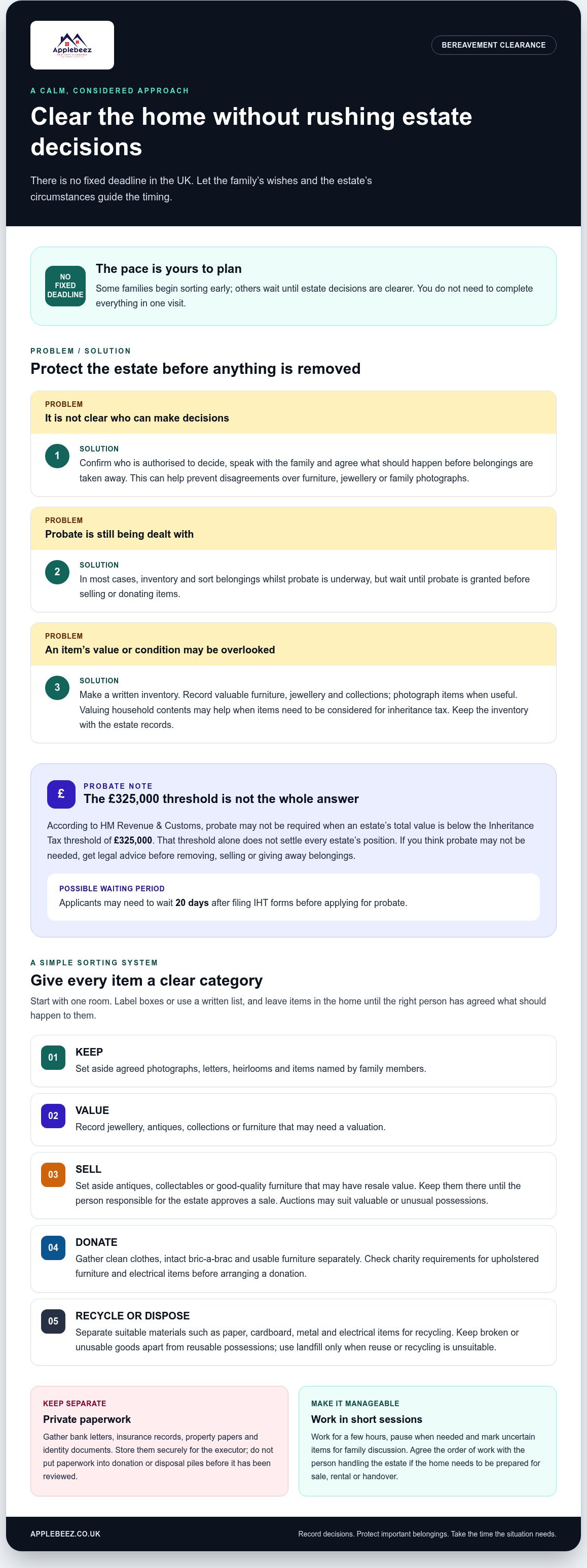
There is no strict deadline for clearing a home after someone dies in the UK. Timing depends on the circumstances and the family’s wishes. Some families start sorting belongings early, while others wait until the estate decisions are clearer. Before anything is removed, confirm who has authority to decide and speak with the family. This can help prevent disagreements over furniture, jewellery or family photographs.
In most cases, belongings can be inventoried and sorted while probate is underway, but should not be sold or donated before probate is granted. Make a written record of items, including valuable furniture, collections and jewellery. Photograph items when it helps document their condition or contents. Valuing household contents before clearance may also help when items need to be considered for inheritance tax. Keep the inventory with the estate records.
Probate may not be required in the UK when an estate’s total value is below the Inheritance Tax threshold of £325,000, according to HM Revenue & Customs. That threshold alone doesn’t settle every estate’s position. If you think probate may not be needed, get legal advice before removing, selling or giving away belongings. Estate arrangements and the value of assets can affect what needs to happen first. Applicants may need to wait 20 days after filing IHT forms before applying for probate.
Use a simple sorting system, and leave items in the home until the right person has agreed what should happen to them. Label boxes or make a list under these headings:
- Keep: Set aside photographs, letters, heirlooms and items named by family members.
- Value: Record jewellery, antiques, collections or furniture that may need a valuation.
- Donate: Identify suitable items for charity once the estate’s decision-maker agrees.
- Recycle or dispose: Separate damaged household goods and ordinary waste for later handling.
Keep private paperwork separate from household items. Gather bank letters, insurance records, property papers and identity documents, then store them securely for the executor. Do not put paperwork in a donation or disposal pile before it has been reviewed. A labelled folder makes records easier to find during estate administration and reduces the risk of removing important documents with general household contents.
You do not need to complete everything in one visit. Work in short sessions of a few hours, and pause when needed. Start with one room or cupboard, marking items for family discussion instead of making a rushed decision. If the home needs to be prepared for sale, rental or handover, agree the order of work with the person handling the estate. A clear inventory and agreed decisions make the eventual clearance more orderly.
Sorting possessions to keep, donate, sell or dispose of
Start with one room and give each item a clear category. A labelled box or written list can separate keepsakes, potential sales, donations and disposal. This makes the estate easier to review and shows family members which decisions remain. Record items before moving them. For example, note the dining table’s condition and photograph a collection before grouping it together.
Set aside possessions with personal or financial importance before sorting ordinary household contents. These may include family photographs, letters, jewellery, watches, collections or furniture with a known history. Ask a family member about uncertain items rather than assuming they are unwanted. Record the item and the agreed decision, particularly when several people have an interest in the estate. Keep documents and personal correspondence separate from donations and recycling.
Use a simple sorting list to keep decisions consistent:
- Keep: Put agreed keepsakes and useful household items in a clearly marked area.
- Sell: List items that may have resale value, such as antiques, collectables or good-quality furniture. Keep them aside until the person responsible for the estate approves their sale.
- Donate: Gather clean clothes, bric-a-brac and usable furniture separately for charity.
- Recycle: Separate materials such as paper, cardboard, metal and suitable electrical items for appropriate recycling.
- Dispose: Keep broken or unusable items apart from reusable possessions to reduce unnecessary waste.
Check donation requirements before arranging collection or delivery. Charities may have specific acceptance requirements for upholstered furniture and electrical items, so check before arranging a donation. A sofa without its label or an untested lamp may not be accepted. Clothes should be clean and dry, and bric-a-brac should be intact and usable. Sort these items before packing so unsuitable goods are not mixed into a donation load.
Auctions may be an option for valuable or unusual possessions, such as paintings, antiques and specialist collections. Group related items and keep any paperwork that may help describe their origin or history. Do not assume every old object has a sale value: condition, demand and identification all matter. For recycling, separate materials rather than putting mixed household contents into one pile. Use landfill only when reuse or recycling is unsuitable. A written record of each decision helps the family track what was kept, sold, donated or removed.
What Is Bereavement Clearance?
A bereavement house clearance removes agreed household contents after someone has died. It can involve sorting, reuse, recycling and disposal, as well as preparing rooms for their next use.
Compassionate clearance after a bereavement
A considerate clearance starts with clear instructions about which rooms and belongings are included. The executor or family can identify keepsakes, private documents and valuable items before work begins. They can also highlight possessions needing careful handling, such as photographs or a memorial object. Agreeing these boundaries helps prevent important items being removed during a difficult time.
Household clearance and waste removal
A house clearance service may remove agreed furniture, appliances, clothing and general household contents. Reusable goods can be separated from items for recycling or disposal, rather than treating everything as waste. For example, usable chairs can be kept apart from a broken appliance. The property’s contents and condition shape the work involved. Waste transfer notes may also be provided for probate records when required.
The clearance process and scheduling
Start by identifying the rooms to clear, items to retain and any access arrangements for the property. The person arranging the work can then discuss the contents and the intended completion point, such as preparing the home for sale, rental or handover. Scheduling should allow time for family decisions and estate administration. A house clearance team may complete work within days, helping avoid probate delays.
Probate clearance addresses the practical need to remove agreed contents, while the estate’s administration guides decisions. Items may need to be inventoried or valued before removal. Keep relevant documents and records separate from household goods, and make sure the person responsible for the estate has agreed what happens to possessions. A written list can track retained, reusable and discarded items.
The cost depends on the property and the work required. Factors include property size, the volume and type of contents, access, labour and disposal needs. A clear description of the rooms, furniture, appliances and items needing special handling helps explain the scope. If there are valuable objects, set them aside for review rather than mixing them with general household contents. This gives the estate a clearer record of what is removed and why.
Emotional sensitivity during probate clearances
For a house clearance, choose a waste carrier registered for the relevant UK nation. Waste transfer notes may be provided for probate records when required. These records help document how waste from the property was handled. Keep any paperwork with the estate documents, alongside inventories and valuation records.
In a UK house clearance, the executor is responsible for ensuring the deceased person’s estate is handled correctly. This includes managing decisions about the contents and keeping an accurate record of what happens to them. Family members can help identify sentimental possessions, while the executor ensures agreed decisions are followed. A written list can record what stays, what is donated and what is removed.
There is no strict timeframe for clearing a deceased person’s home in the UK. The right timing depends on the circumstances and the family’s wishes. A property may need to be cleared for an inheritance tax valuation, sale, rental or handover. Clearing can also help address deterioration or security concerns. Discuss the purpose of the work before setting a date.
Probate and clearance planning often overlap. Applicants may need to wait 20 days after filing IHT forms before applying for probate. During that period, the family can organise records, list contents and identify belongings needing valuation. In most cases, don’t sell or donate possessions before probate is granted. Keeping them in place until decisions are clear can help avoid disputes or difficulties with estate records.
Emotional decisions can take longer than practical tasks. A family member may want to review photographs, letters or inherited furniture before anything is moved. Agree on a process that gives relatives time to identify personal items, and keep a separate area for anything awaiting a decision. Short, focused visits can make it easier to discuss one room at a time without rushing through the property.
Before work begins, the executor can prepare a simple record of the contents and instructions. Note items for valuation, possessions to retain and goods approved for donation. Keep receipts or written records for relevant transactions, and store any waste transfer notes with probate paperwork. This creates a clearer account for estate administration and helps family members understand what has happened to household items.
Choose a registered waste carrier for the relevant UK nation and agree which items may be removed. Explain whether any rooms or belongings need extra care, such as private correspondence or family photographs. A probate clearance should follow the executor’s instructions, respect the family’s decisions and keep important records accessible. These steps balance the practical work with the emotional weight of clearing a home.
Choose a house clearance company registered as a waste carrier for the relevant UK nation. Waste transfer notes may be required, so keep them with the estate records to document how waste was handled.
Clearance costs and included charges
Clearance costs depend on the property, its contents and the work required. For a Durham home, a useful quote should describe the rooms included, the items to remove and any charges covered.
Factors affecting clearance costs
A quote for a Durham property will reflect its size, contents and access. A furnished house with bulky furniture may require more labour than a sparsely furnished flat. Stairs, restricted access and specialist handling can also affect the work. Describe each room, including heavy appliances or fragile possessions, so the quote reflects the actual clearance rather than a general estimate.
Sorting decisions can change what needs to be removed. Separate items for donation or reuse from goods for disposal, and identify sentimental items and valuables beforehand. Explain whether the property needs a full clearance or only selected rooms. If any items need a solicitor’s attention or valuation, keep them separate and record what should happen to them.
There is no single price that applies to every Durham property. The amount depends on the volume and type of contents, labour, access and disposal needs. Applebeez provides a free, no-obligation quote with no hidden fees. Share details about the rooms, bulky items and access restrictions so the proposed work can be assessed for the property.
Charges included in the clearance
Labour and waste transfer are costs commonly included in clearance pricing. Read the quote’s description of the work, including which rooms and contents it covers. Check that it explains how furniture, appliances and household waste will be handled. A clear scope helps distinguish the agreed work from any separately listed charge and gives the executor a useful record for estate papers.
Before agreeing, keep the written quote with the estate records and note any items excluded from removal. Make sure beneficiaries understand what has been agreed, particularly if they have different views about sentimental belongings. Disputes can arise when instructions conflict, so the executor should clearly state what may be removed. Avoid unclear totals, unexpected add-ons or pressure to accept before the scope is documented.
For a Durham clearance, request a free, no-obligation clearance quote based on the property and its contents.
Applebeez: House Clearance Service
Applebeez provides a House Clearance Service for families and executors who need help clearing a property after a bereavement. Its Probate Clearance Service supports estate-related clearances, while its cleaning service can leave a property clean after the agreed work. These services may suit you when belongings have been sorted and the home needs clearing for sale, rental or handover.
Before work begins, identify items to keep, valuables or documents needing separate handling, and the rooms included. Clear instructions help the clearance follow the family’s decisions and the executor’s direction. Applebeez also provides a Business Clearance Service for commercial premises.
To take the next step, contact Applebeez to discuss the clearance the property needs.
Choose a manageable next step
After a bereavement, it can help to break a large task into one clear decision. Decide what needs attention first: the property, a particular room or the final clean. Then note who will give instructions and what outcome the family needs. This gives your bereavement clearance a practical starting point without requiring every decision to be made at once.
Applebeez provides a House Clearance Service, Business Clearance Service and cleaning. These services can help when you need support clearing a home or commercial premises, or cleaning a property after the clearance. To get started, describe the property and the help you need.
Contact Applebeez about clearance to discuss what you need. A considered first step can make the work ahead feel more manageable.
Frequently Asked Questions
How soon should I clear a loved one’s home after they pass away?
There is no fixed UK deadline for clearing a home; timing depends on the estate and the family’s wishes. First, identify any practical reason to act, such as preparing the property for handover or addressing security concerns. Then agree who will make decisions and what can be sorted now. If probate is underway, keep a record of the contents and avoid selling or donating belongings before the grant.
What does bereavement clearance mean in the UK?
Bereavement clearance means clearing a deceased person’s home in line with the family’s decisions and the estate’s requirements. It can involve removing furniture, appliances and other household contents while setting aside chosen possessions. For example, an executor may arrange a clearance before a property is sold or handed over. Separate items to keep, donate, recycle or dispose of rather than treating everything as waste.
What is included in a bereavement house clearance?
A house clearance can cover agreed household contents, including furniture, appliances, clothing and personal effects. Items can be separated for keeping, donation, recycling or disposal, and the property can also be cleaned after clearance. Before work starts, make a room-by-room list of what should remain, such as a bed or kitchen appliance, and what can be removed. Keep valuables and private paperwork out of the general clearance pile.
How much does bereavement clearance cost in the UK?
The cost depends on the property, the volume and type of contents, access, labour and disposal needs. Applebeez provides a free, no-obligation quote with no hidden fees, based on the clearance required. For a Durham home, describe the rooms, bulky items, stairs or access restrictions when requesting a quote. This gives the quote a clearer basis than a broad UK average that may not reflect your property.
How do I arrange a clearance after a bereavement step by step?
Start by identifying who will give instructions and which belongings must stay. Then contact Applebeez for a free, no-obligation quote and discuss the property and clearance needs. When you are ready, book a convenient clearance date. On completion, the keys are returned, the property is left spotless and a receipt is emailed. Keep your item list and estate records together so decisions remain clear during the work.
Do I need probate or the executor’s permission before clearing a deceased person’s home?
Confirm the executor’s authority before arranging removal, and don’t assume probate is always required. According to HM Revenue & Customs, probate may not be required in the UK when an estate’s total value is below the Inheritance Tax threshold of £325,000. This threshold doesn’t settle every estate’s position. In most cases, belongings shouldn’t be sold or donated before probate is granted, although they can be inventoried and sorted.
What should I do with valuables, important documents and personal belongings before clearance?
Separate valuable items and important papers from ordinary household contents before clearance begins. Put jewellery, watches, property papers, bank letters and insurance documents in a secure place, then list them for the executor. Set aside photographs, letters and other personal keepsakes for family review. If an item may need to be valued for the estate, record its location and condition rather than putting it with donations or disposal.
Can charities or reuse services collect furniture and household items after a bereavement?
Suitable household goods can be set aside for donation or reuse, but check that they meet the charity’s acceptance requirements. Upholstered furniture needs its fire safety label for charity donation, and electrical items need PAT testing for acceptance. Keep these items separate from damaged goods and general disposal. A simple list of furniture and household items can help organise what is offered and what remains for other arrangements.


