

What if a plain-looking watch, a jewellery box or a painting tucked away in a cupboard is removed before anyone realises it may matter? It’s an understandable concern when a family is already managing practical arrangements and difficult decisions. A plan for valuable items probate clearance should begin before anything is taken from the property.
Start by recording belongings, noting anything that needs a closer look, and setting aside items that require a valuation or a family decision. This creates a clear record and helps prevent uncertainty or disagreement later. An item’s age or appearance alone may not indicate its value, so avoid assuming that something is either valuable or worthless.
This article explains how to identify belongings that may need attention, document them clearly and keep them separate until decisions are made. You’ll also learn how to prepare for a respectful clearance once the executor’s instructions are clear. Applebeez provides probate clearance across the North East of England, working with executors and solicitors to clear properties according to the estate’s needs.
Key Takeaways
- Valuable items probate clearance includes belongings with family meaning or ownership questions, not only items with an obvious financial value.
- Photograph items where they are and note identifying details, such as maker’s marks or receipts, without treating them as proof of value.
- Use a simple checklist to keep authority, family communication and written clearance instructions in order before items are removed.
- Separate possible valuation candidates from belongings that can be included in the agreed clearance.
- Applebeez works with executors and solicitors across the North East to clear agreed contents respectfully, according to the estate’s instructions.
Valuable Items in Probate Clearance: Why Preparation Matters
Before a property is cleared, the family and the person administering the estate need time to identify what should be kept, assessed, shared or removed. The phrase valuable items probate clearance covers more than objects with a likely sale value. It can include belongings with family meaning, items whose ownership is uncertain, and possessions that may be relevant to estate records.
A probate clearance involves removing agreed contents from a property as part of managing a deceased person’s estate. It should follow decisions about belongings, not replace them. The executor decides what belongs to the estate and what should happen to each item, then gives clear instructions for the clearance.
Age, appearance and condition can’t establish an item’s market value on their own. A worn watch may merit a closer look, while an impressive-looking object may have little resale value. Treat uncertain items as questions to resolve, rather than including or excluding them based on appearance alone.
Which belongings may deserve a closer look?
Jewellery, watches, artwork, antiques, medals and collections are obvious candidates for careful review. Ordinary-looking possessions can matter too. A small photograph, a familiar ornament or a well-used tool may have personal or historical significance, even if it has little financial value.
Keep papers and other clues with the item where possible. Receipts, labels, maker’s marks, letters and photographs may help explain its history or connection to the deceased. They don’t prove what an item is worth, but they can give the executor useful context when deciding what further steps are needed. Before separating any documents from the belongings they describe, note where they were found.
Who should decide what happens to estate belongings?
The executor coordinates the estate’s administration and organises decisions about its belongings in line with the appropriate process. The probate administration process describes the wider context of dealing with an estate and distributing assets. Beneficiaries may have strong preferences, but a preference or family assumption alone doesn’t settle whether an item belongs to them or to the estate.
Make decisions through the executor and keep a written record of agreed arrangements. If two people claim the same item, or it’s unclear whether it was gifted before the death, pause before including it in the clearance. Seek appropriate legal guidance where ownership or entitlement is disputed, rather than asking the clearance team to resolve the disagreement.
Keep clearance and decision-making separate
Preparation gives the executor room to make considered choices and helps prevent belongings from being removed before their significance is understood. Once items have been identified, any necessary assessment arranged and family decisions recorded, the executor can give clear instructions about what may be cleared. Applebeez works with executors and solicitors across the North East to clear deceased estates respectfully according to the estate’s needs.
How to Identify, Record and Safeguard Potentially Valuable Items
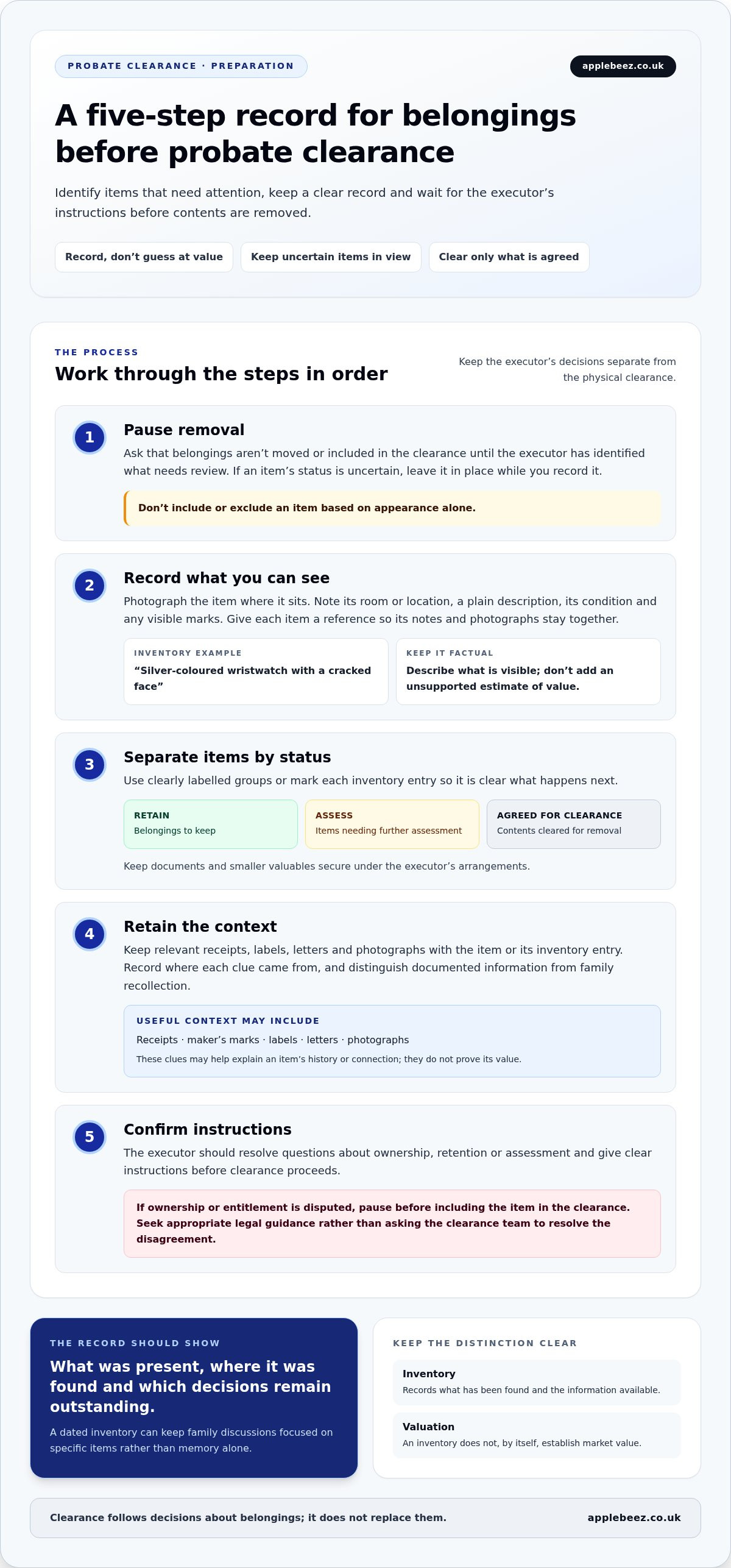
A calm, consistent process makes it easier to spot belongings that need attention and keeps clearance instructions clear. Work through these steps before any contents are removed. The aim is to create a reliable record, not to make a quick judgement about an item’s value.
- Pause removal. Ask that belongings aren’t moved or included in the clearance until the executor has identified what needs review. If an item’s status is uncertain, leave it in place while you record it.
- Record what you can see. Photograph the item where it sits, then note its room or location, a plain description, its condition and any visible marks. Give each item a reference so its photographs and notes stay together.
- Separate items. Make distinct groups for belongings to retain, those needing further assessment and contents agreed for clearance. Keep documents and smaller valuables secure under the executor’s arrangements.
- Retain the context. Keep relevant receipts, labels, letters and photographs with the item or its inventory entry. Record where each clue came from, distinguishing documented information from family recollection.
- Confirm instructions. The executor should resolve questions about ownership, retention or assessment and provide clear instructions before clearance proceeds.
A dated inventory records what was present, where it was found and which decisions remain outstanding. This can keep family discussions focused on specific items rather than memory alone.
Make a simple inventory before clearance
Keep descriptions factual: “silver-coloured wristwatch with a cracked face” is more useful than an unsupported estimate of value. Take clear photographs from more than one angle where practical, and link each image to its inventory entry. Note who supplied information about an item and whether it came from a receipt or another document, or from someone’s recollection.
For probate and tax matters, consult GOV.UK guidance on valuing an estate. An inventory records what has been found; it doesn’t, by itself, establish market value.
Separate items pending a decision
Use clearly labelled groups or write a status beside each inventory entry: retain, needs further assessment, or agreed for clearance. Don’t mix sentimental belongings or potentially relevant paperwork into general contents. Keep small valuables and important papers secure under the executor’s arrangements, and make sure everyone involved knows which items must not be removed.
Once the record is complete and instructions are settled, Applebeez can carry out probate clearance according to the estate’s needs. For executors arranging the agreed contents to be cleared, the probate clearance service provides a practical next step.
Does an Item Look Valuable? What Appearance Can and Cannot Tell You
A polished finish, an old date or an impressive display case can catch the eye, but none proves what an item is worth. The reverse is also true: a worn or ordinary-looking object may deserve a closer look. During valuable items probate clearance, visible clues should prompt sensible questions, not unsupported estimates or decisions to dispose of belongings.
Use observations to decide what needs further assessment. Keep related evidence with the item, and don’t treat a clue as proof of authenticity or market value.
| Visible clue | Sensible next step |
|---|---|
| A maker’s mark, signature or date | Photograph it clearly and record its location. Don’t assume the mark identifies the maker or confirms authenticity. |
| A certificate, receipt or old catalogue | Keep it with the relevant item or inventory entry, and note what it appears to relate to. |
| A matching set or collection | Record the pieces together and note any missing or damaged parts before separating anything. |
| Evidence of past ownership or family history | Preserve letters, photographs or other records, distinguishing documented details from family recollection. |
| Wear, damage or repairs | Describe the condition plainly and photograph it. Condition may affect assessment, but doesn’t settle the item’s value. |
Clues can guide assessment, not replace it
A signature may be genuine, copied or added later. A certificate may relate to a different object, while a maker’s mark can be difficult to interpret without context. Provenance, meaning the documented history of an item’s ownership, may help with assessment, but a story passed down in the family is not the same as supporting paperwork.
Keep evidence together and record where it came from. Authenticity, condition, completeness and provenance can all affect how an item is assessed. No single clue confirms a sale value, so avoid adding estimates to the inventory unless they come from an appropriate valuation source.
Personal meaning, probate records and formal valuation
An object can be priceless to a family and have a different open-market value. Equally, an item with little sentimental meaning may still need to be considered in the estate’s records. Probate reporting and tax considerations depend on the circumstances, so executors should seek case-specific guidance from their solicitor or appropriate adviser rather than rely on appearance or a clearance estimate.
Citizens Advice offers information about safeguarding estate assets and possessions. Where ownership, a claimed gift or beneficiary entitlement is disputed, seek legal advice before deciding what happens to the item.
A clearance team removes contents agreed for clearance, while a formal valuation is a separate task. Keep items requiring assessment out of the agreed clearance until the executor has given clear instructions. This protects the estate’s records and gives the family time to resolve questions properly.
A Practical Checklist Before Valuable Items Are Included in Clearance
A short written plan makes decisions easier to follow and reduces the chance of belongings being confused during a clearance. Start with the essentials, then add detail where it helps. There’s no need to create a complicated record of every object in the property.
Use this checklist to organise valuable items probate clearance:
- Authority: Identify the executor responsible for giving clearance instructions. Keep the relevant contact details available to the people involved.
- Inventory: Record items that are retained, awaiting assessment or agreed for clearance. Include a plain description, location and current status. Add photographs, condition notes and identifying marks where useful.
- Valuation decisions: Mark which belongings need further assessment and keep them out of the agreed clearance contents until the executor has decided what should happen. Record any advice or valuation information received, if relevant.
- Family communication: Share decisions with the people who need to know. Note agreed arrangements and unresolved questions, and allow time to address known concerns before belongings are removed.
- Written instructions: Set out what can be cleared, what must remain and how retained items will be identified. Include practical arrangements for access to the property.
The aim is clarity, not paperwork for its own sake. A simple list with clear item descriptions and decisions is more useful than a lengthy inventory that nobody can easily follow. Add photographs or background notes where they help explain an item or prevent confusion.
Agree decisions before the clearance date
Before the planned clearance, review the list with the executor and resolve family questions wherever practical. Mark each item or group as retained, awaiting assessment or approved for clearance. If ownership or entitlement is disputed, pause the decision and seek appropriate guidance rather than including the item by assumption. Record the executor’s instructions in writing so the agreed scope is clear.
Prepare the property and information
Where practical, place retained belongings in a clearly identified area, separate from agreed clearance contents. Use labels that are easy to understand, such as “Do not remove” or “Executor to decide”, and make sure the written inventory uses the same descriptions. Don’t rely on a verbal explanation or a label alone; both should point to the same item or area.
Keep the inventory, relevant papers and contact details accessible to the executor. Tell the clearance team which items are excluded and how to recognise them. If a decision changes, update the written instructions and labels before work begins. This gives everyone a shared reference and keeps the clearance aligned with the estate’s decisions.
Once belongings are identified and instructions are clear, Applebeez works with executors and solicitors across the North East to clear properties respectfully according to the estate’s needs. Arrange probate clearance with Applebeez when the agreed contents are ready to be cleared.
Arrange a Respectful Probate Clearance with Applebeez in the North East
Once the executor has identified belongings to keep, assess separately or include in the clearance, the practical work can begin. Applebeez provides probate clearance across the North East, working with executors and solicitors to clear deceased estates respectfully and according to the estate’s needs. Separating decisions from removal helps families move forward without treating the clearance as a way to decide what belongings are worth or who should receive them.
What to expect from a probate clearance
A probate clearance removes contents the executor has identified and authorised for removal. Before work begins, clear instructions distinguish agreed contents from items that must remain or are still awaiting a decision. If your inventory or labels identify exclusions, include those details in the instructions.
Applebeez carries out the agreed property clearance with respect for the circumstances and the executor’s directions. Questions about an item’s value, ownership or entitlement should be dealt with separately before it is included in the agreed clearance. This keeps the practical task clear and leaves estate decisions with the executor.
Applebeez serves Sunderland, Newcastle, Stockton-on-Tees, Middlesbrough, Darlington and Durham. For families arranging valuable items probate clearance, having the executor’s decisions and instructions in order gives the clearance a clear scope, whether the property is in one of these locations or elsewhere in the North East coverage area.
When the property needs cleaning after clearance
Once agreed contents have been removed, the property may need cleaning before its next stage. Applebeez provides property cleaning following a clearance, helping prepare the home for sale or another use. The executor can set out what is needed in the instructions, keeping the cleaning request distinct from decisions about belongings.
Cleaning doesn’t establish ownership, settle family disagreements or provide a valuation. Those matters should be resolved through the estate’s appropriate process. Keeping each task separate makes responsibilities easier to understand: the executor directs decisions about estate contents, valuation or legal questions are handled separately, and clearance and cleaning follow the instructions given.
If the belongings have been identified and you’re ready to arrange the practical work, discuss a probate property clearance with Applebeez. The team works with executors and solicitors across the North East to clear properties according to the estate’s needs.
Take the Next Step with Confidence
Once the executor is ready to proceed, a clear scope gives the family a practical way forward. Keep unresolved ownership or valuation questions separate from the clearance, and make sure the instructions reflect what has been agreed. This helps ensure valuable items probate clearance is handled with care, without asking the clearance team to make decisions that belong to the estate.
Applebeez provides specialist clearance for deceased estates, working with executors and solicitors across the North East of England. The team follows the estate’s instructions to clear agreed contents respectfully. If you’re ready to arrange the practical work, talk to Applebeez about a respectful probate clearance.
Each estate has its own needs, and the next step can be a straightforward conversation about the property and the clearance required. With decisions clearly set out, you can move ahead at a manageable pace and give the belongings, the family and the home the consideration they deserve.
Frequently Asked Questions
How do executors identify valuable items in a probate property?
Executors can check the property systematically, including drawers, cupboards, loft spaces and boxed contents, while noting where uncertain items are found. Look for related pieces that may be stored apart, such as a watch and its papers or a set with one piece elsewhere. Record items for follow-up rather than guessing at their value. Valuable items probate clearance can include belongings relevant to estate records as well as those with possible sale value.
Should valuable belongings be removed before probate clearance?
Not automatically. The executor should first decide what should happen to each item and give clear instructions about anything excluded from clearance. If a beneficiary is authorised to take a belonging, note who has it and the agreed arrangement. For small items that need protection, follow the executor’s arrangements and record their location. Avoid taking belongings based only on an assumption that they have already been gifted or promised.
Can a clearance company value items in a deceased estate?
A clearance and a formal probate valuation are separate tasks. If an item needs assessing for estate administration, keep it outside the agreed clearance contents while the executor arranges suitable valuation advice. An informal impression about an object shouldn’t be treated as a substitute for a formal valuation or guidance from the estate’s solicitor.
What should I do if family members disagree about an item?
Pause any decision to remove or distribute the item until the disagreement has been considered. Ask each person to explain their understanding, and record any supporting information, such as a letter, will reference or evidence of a previous gift. Pass the details to the executor. If ownership or a beneficiary’s entitlement remains disputed, seek legal advice before including the item in the clearance or handing it to anyone.
Do old belongings always have financial value?
No. Age alone doesn’t establish whether something will sell for a meaningful amount. Condition, authenticity, demand and evidence about an item’s history can all affect its assessment. A worn object might warrant a closer look, while an elaborate antique-looking piece may not have a strong market. Remember, too, that a possession can matter greatly to the family without having a corresponding open-market value.
What records should I keep before a probate property is cleared?
Keep a dated list of items that are retained, awaiting a decision or authorised for removal. Add the room or location and a short description so the executor can identify each one. Keep relevant receipts, letters or certificates with the corresponding record, and note who supplied any information. Written clearance instructions are also useful if arrangements change, as they give the executor and family a shared reference.
Can probate clearance include cleaning the property afterwards?
Yes. Property cleaning can be arranged following clearance if the home needs attention before its next stage, such as being prepared for sale or another use. Keep this separate from decisions about belongings: cleaning doesn’t assess an item’s value, settle ownership or determine who should receive estate contents. The executor can set out the clearance instructions and cleaning needs as distinct parts of the property’s practical arrangements.
Does Applebeez provide probate clearance in the North East?
Yes. Applebeez provides probate clearance for deceased estates across the North East, including Sunderland, Newcastle, Stockton-on-Tees, Middlesbrough, Darlington and Durham. The team works with executors and solicitors to clear properties according to the estate’s needs. Once the executor has decided which contents are authorised for removal, Applebeez can carry out the practical clearance respectfully. Property cleaning can also follow if the home needs it.

