

Choosing between HIPPOBAG collection and a full property clearance service depends on more than the collection charge. Consider the amount of waste and the work needed to clear the property.
It’s understandable to focus on the upfront cost, especially when planning a clear-out can add to the stress. Bag collection may suit waste you’ve already gathered, while a full clearance is designed for a property whose contents still need removing.
This guide explains how waste volume affects your choice, what can influence the overall cost and when each option makes practical sense in Newcastle, Sunderland, Stockton-on-Tees, Middlesbrough, Darlington and Durham. You’ll also learn what a full property clearance involves, so you can compare the work and choose an approach that fits the job.
Key Takeaways
- Work out whether the waste is already gathered or still spread throughout the property; that helps identify the kind of removal work needed.
- Estimate the volume before comparing options, as the amount of waste can change which removal method is practical.
- Allow for access and handling as well as waste volume when considering what affects the overall cost.
- A private man-and-van carrier can usually collect a Megabag within 1-2 days, which may help when timing matters.
- For a property that needs its contents cleared, a house clearance service can handle a broader task than collecting bagged waste.
Estimating waste volume and removal costs
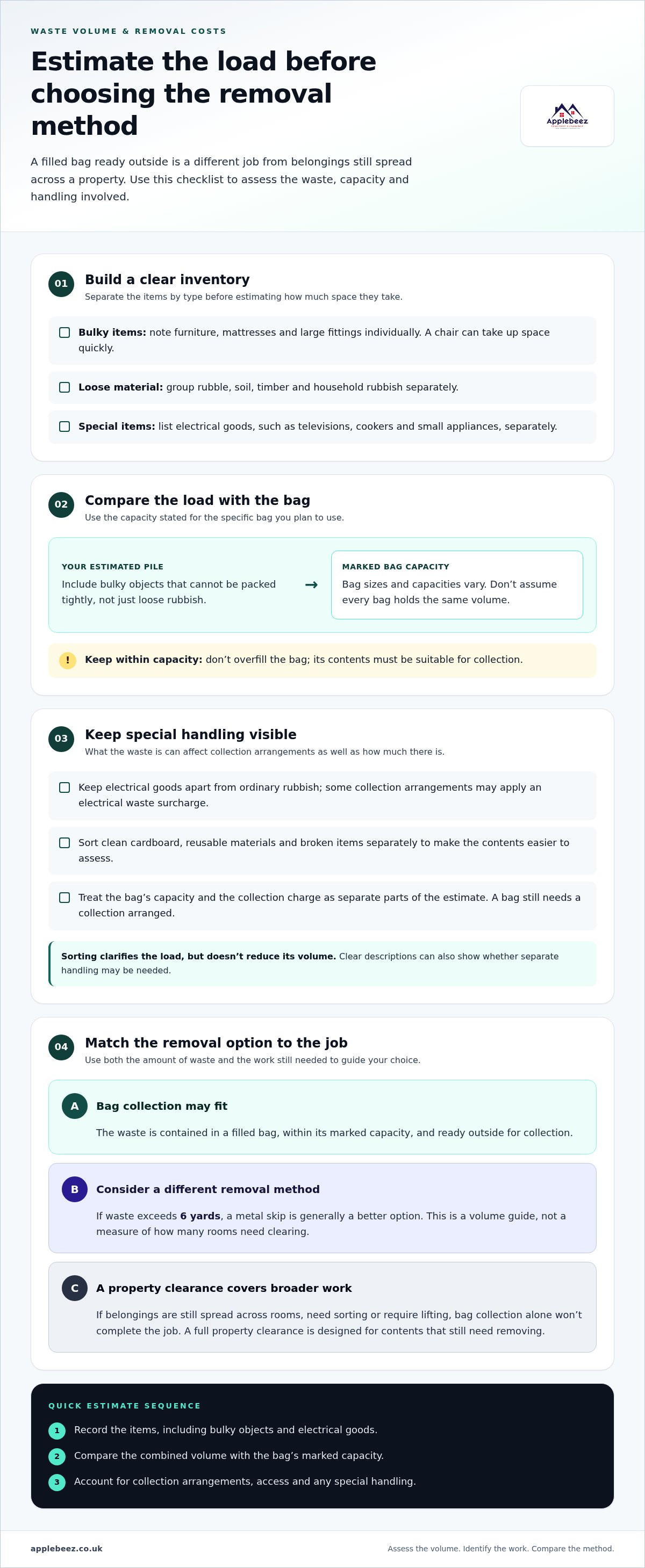
Start by separating what needs removing from how it is presented. A filled skip bag is different from belongings spread across rooms, even if they appear to take up similar space. For a useful estimate, list bulky items, loose rubbish, garden waste and electrical goods separately. This inventory helps show whether you need a collection of prepared waste or a broader removal service.
Compare the pile with the stated capacity of the skip bag you plan to use. Bag sizes and capacities vary, so use the figure provided for that specific bag rather than assuming they all hold the same volume. Account for bulky items: a chair can take up space quickly, while flattened cardboard stacks more compactly. Don’t overfill the bag, as its contents must be suitable for collection.
- Bulky items: note furniture, mattresses and large fittings individually.
- Loose material: group rubble, soil, timber and household rubbish separately.
- Special items: list electrical goods so their handling can be considered separately.
That figure applies to bag collection, not a full house clearance. The amount and type of waste, along with the collection arrangements, can affect what’s included. Treat the bag’s capacity and the collection charge as separate parts of your estimate. Even if a bag is available, collection must still be arranged.
Waste volume also helps identify when a skip bag stops being the practical alternative. If the load is contained and ready outside, collection can be straightforward. If waste exceeds 6 yards, a metal skip is generally a better option. This is a volume-based guide, not a measure of how many rooms need clearing. Compare the actual pile, including bulky objects that cannot be packed tightly.
List electrical waste separately. Items such as televisions, cookers and small appliances may need different handling from ordinary rubbish. Some collection arrangements may apply an electrical waste surcharge, so keep these items visible when estimating rather than burying them among general waste. Their type and number can affect how they are collected and processed.
Sorting waste before collection makes the load easier to assess. Keep clean cardboard together, separate reusable materials from broken items, and place electrical goods apart from mixed rubbish. For example, timber, packaging and an old appliance are easier to describe when identified separately. Sorting won’t reduce the volume, but it clarifies what the load contains and whether separate handling may be needed.
For a Newcastle clear-out, build the estimate in three steps: record the items, compare their combined volume with the bag’s marked capacity, then account for collection and special handling. A single bag of sorted waste may suit a collection-only option. Several bulky loads, mixed contents across rooms or waste beyond 6 yards point towards a different removal method. The right choice depends on both volume and how much sorting or lifting remains.
How does HIPPOBAG collection work, from booking to pickup?
A collection-only booking suits waste already placed in a HIPPOBAG. The bag holds the rubbish, and a separate collection service removes it. You’ll need to prepare the load, arrange collection and make the filled bag accessible. Collection alone doesn’t remove belongings from inside the property or gather loose waste for you.
Start by checking the bag’s condition and position. Confirm the collection address, then describe the waste and the bag’s location when arranging removal. The carrier needs to know what is being collected, where it is and whether access is straightforward. For example, a bag in a front drive is easier to describe than one behind a locked side gate.
- Prepare the load. Put the intended rubbish inside the bag, keeping the contents within its marked capacity.
- Describe the collection. Give the carrier the address, bag details, contents and access information.
- Arrange a collection time. Agree the collection arrangements and make sure the bag remains accessible.
- Clear the collection area. Move vehicles or loose items that block access to the bag.
- Check the area afterwards. Make sure the bag has been removed and the access route is clear.
Describe the waste clearly. A bag of household rubbish differs from one holding building materials or electrical items. Clear information helps the carrier assess the load and any separate handling needs before collection. If the contents change after booking, update the description so it matches the bag presented.
Access is an important part of the booking. Note narrow entrances, steps, gates, parked vehicles and the distance from the road. If a bag is at the rear of the property, explain the route from the street. This helps the carrier understand the collection point and any obstacles that could affect removal.
A private man-and-van waste carrier can usually respond within 1-2 days. That gives a useful guide for planning, but the collection still needs arranging around the bag’s location and access. Keep the area available during the agreed collection window. Don’t leave a car or garden items across the route after confirming the booking.
Before collection, compare the bag’s contents with your description. Keep electrical goods and unusual items visible rather than hiding them beneath general rubbish. If the bag is overfilled, damaged or difficult to reach, the planned collection may not suit the load presented. A careful check helps ensure the booking details match the waste awaiting removal.
The key difference is preparation: a collection service removes a filled bag, which you organise and load. If waste remains spread across rooms, furniture needs sorting, or belongings need separating, bag collection alone won’t complete the job. For a small, prepared load, describe the bag accurately, arrange access and have it ready for the carrier.
How much does a full property clearance cost in the UK, and what affects the price?
There is no single fixed UK price for clearing a whole property. The cost depends on the work involved, not simply the number of rooms. A furnished home with items in cupboards, loft spaces and outbuildings takes different labour from an almost-empty property. For an estimate in Newcastle, describe the contents and areas that need clearing.
The price depends on the job and is provided after a quote request. Key factors include the volume and type of contents, access, labour, sorting and any additional work requested. These details help shape a quote around the task. For example, a clear path from the front door can make removal simpler than carrying furniture down narrow stairs.
Volume affects both handling and transport. A clearance team moves each item from its location, rather than collecting a single prepared bag. A room with a sofa, wardrobe and loose household items requires different handling from one with a few boxed belongings. Describe bulky furniture and packed storage areas separately when explaining the job.
Access can change the work involved. Note stairs, narrow hallways, limited parking and long walks between the property and collection point. A large wardrobe in an upstairs bedroom takes more handling than a small table beside an accessible entrance. Details about gates, shared entrances and outbuildings also help identify which areas need attention.
The contents matter, too. A property may contain furniture, clothing, books, kitchenware, broken household goods and electrical items, which can require different handling and sorting. Identify unusual or heavy items instead of describing everything as general rubbish. Include an old kitchen appliance in your inventory rather than leaving it until the clearance begins.
Sorting requirements can affect the time and work involved. Some properties contain items that should remain, such as documents, photographs or personal belongings. Mark these clearly before removal. For example, separate paperwork from discarded magazines and identify family photographs. This clarifies the scope and reduces the risk of wanted belongings being mixed with items for disposal.
Some jobs also involve more than removing contents. Cleaning may be needed afterwards, particularly if cupboards, floors or rooms need attention. Treat this as a separate requirement when describing the property. Explain whether you need removal only or removal followed by cleaning, so the quote reflects the work requested.
- List the contents: include bulky furniture, electrical goods and packed storage.
- Describe access: mention stairs, narrow routes, gates and parking limitations.
- Mark items to keep: identify documents, photographs and personal belongings before work starts.
- Set out the scope: state which rooms, outbuildings or cleaning tasks are included.
These details make comparisons more useful than a headline figure alone. When choosing between HIPPOBAG collection and a full property clearance service, compare what each option covers: collection removes prepared waste, while a full clearance involves handling contents throughout the property. If you need a whole home emptied, the volume, access and sorting required will shape the quote.
How long does HIPPOBAG collection take compared with a full property clearance?
A filled HIPPOBAG is a collection task; a full property clearance includes sorting and removing belongings from the property. A private man-and-van waste carrier can usually respond within 1-2 days. That is a guide to response time, not the time needed to prepare a bag or clear a home.
For bag collection, the work before pickup affects the schedule. The bag must be filled, accessible and ready for removal. A bag behind a parked car, locked gate or narrow passage can complicate access. Share these details when arranging collection, then keep the route clear on the agreed day.
Preparation also determines when a bag is ready. Household rubbish already gathered in one place can be loaded without first sorting cupboards or moving furniture. A clear-out that involves dismantling items or separating materials needs that work done before collection. The carrier removes the prepared bag, not waste still inside the property.
A full clearance involves more stages. Contents may be spread across bedrooms, cupboards, loft spaces, garages and sheds. Each area needs checking, and belongings to keep must be separated from items for removal. A property with boxed possessions and clear access presents a different workload from one with bulky furniture upstairs.
Use this sequence to plan a bag collection:
- Fill the bag and keep its contents within its marked capacity.
- Describe the waste, address and collection point when booking.
- Remove obstacles such as vehicles, garden tools or stored items.
- Keep the access route clear until the carrier has collected it.
For a house clearance, list the rooms and spaces included. Mark items that must stay, such as photographs, paperwork or furniture for family members. Then identify bulky items and access issues, including stairs or narrow hallways. This gives a clearer picture of the handling and sorting involved than describing the job simply as “one house”.
The time required for a full clearance depends on the amount of content, the areas involved, access and how much sorting remains. An empty lounge with a few pieces of furniture differs from a property with packed cupboards and a full loft. Cleaning after removal adds another task to the plan.
To avoid delays, prepare an inventory before arranging either option. For a bag, confirm it is ready and accessible. For a property, note every room, outbuilding and item that needs careful handling. If family members need to decide what stays, make those decisions before removal begins. Unresolved sorting can interrupt the work.
The practical comparison is between a prepared load and a multi-stage job. A collection may be arranged once the bag is ready, with private man-and-van response usually within 1-2 days. A full clearance needs time for access, sorting and handling across the property. Plan around the work still to be done, not just the date waste can be collected.
Applebeez: House Clearance Service
Applebeez can help when a property needs more than a filled bag collected. Its House Clearance Service suits homes with belongings remaining across rooms, cupboards or other areas. Its Probate Clearance Service offers compassionate support to families managing an estate. Applebeez also clears business premises through its Business Clearance Service, with cleaning available when the property needs attention after clearance.
If you’re deciding between a bag collection and a broader clearance, consider whether you can sort and load everything yourself. A prepared bag may suit a small, contained load; a property-wide job may call for a house clearance. To discuss your clearance needs, contact Applebeez.
Choose a clear next step for your property
Before arranging removal, decide what needs to happen inside the property as well as what needs to leave. A written list of rooms, items to keep and any cleaning required helps you explain the job clearly. The choice between a HIPPOBAG collection and a full property clearance service comes down to who prepares the waste and how much work remains on site.
If belongings are still spread throughout a home or business, Applebeez offers House Clearance Service and Business Clearance Service, alongside Cleaning. Describe the property and the outcome you need to get a free, no-obligation quote and take the next step with a clear picture of the task.
Contact Applebeez about your clearance to discuss the work. A considered plan can make the next stage feel more manageable.
Frequently Asked Questions
How much does collection cost?
This is a market estimate for collecting a bag, not a quote for clearing a property or Applebeez’s pricing. The amount of waste and any special handling, such as electrical items, can affect the cost. Compare what collection covers with the work needed to remove belongings from inside the property.
What does a full property clearance service include?
A full property clearance can include removing unwanted household items, furniture and personal effects from a home. Applebeez’s House Clearance Service is suited to properties needing a broader clear-out than bag collection. Cleaning can also be arranged separately after clearance. Applebeez serves Newcastle and nearby areas including Sunderland, Stockton-on-Tees, Middlesbrough, Darlington and Durham.


