

An office handover can depend on what you leave behind as much as what you take. To clear an office before handover, separate items to keep from furniture, equipment and belongings to remove, and handle confidential records and data-bearing devices securely. For upper-floor removals, plan around the floor level, lift or stair access, and loading arrangements.
It’s easy to focus on desks and chairs, but employee belongings, cupboard contents and equipment need attention too. Check the lease and handover requirements to find out what must be cleared, cleaned or left in place.
This checklist covers what to sort, how to handle furniture and sensitive data, and what to consider when choosing a clearance firm in Newcastle. It also explains how to plan upper-floor removals around building access and prepare the office for handover.
Key Takeaways
- Review the lease and handover terms before deciding what can stay, and separate items to keep from those for reuse or removal.
- Sort employee belongings and business equipment clearly so nothing is removed by mistake.
- Keep confidential records out of general clearance piles, and back up and wipe data-bearing devices before arranging their onward route.
- Begin planning 4-6 weeks before the lease ends to allow time for sorting, access arrangements and handover requirements.
- Plan upper-floor removals around lifts, stairs, loading arrangements and other contractors working on site.
Can I leave unwanted office furniture for the landlord?
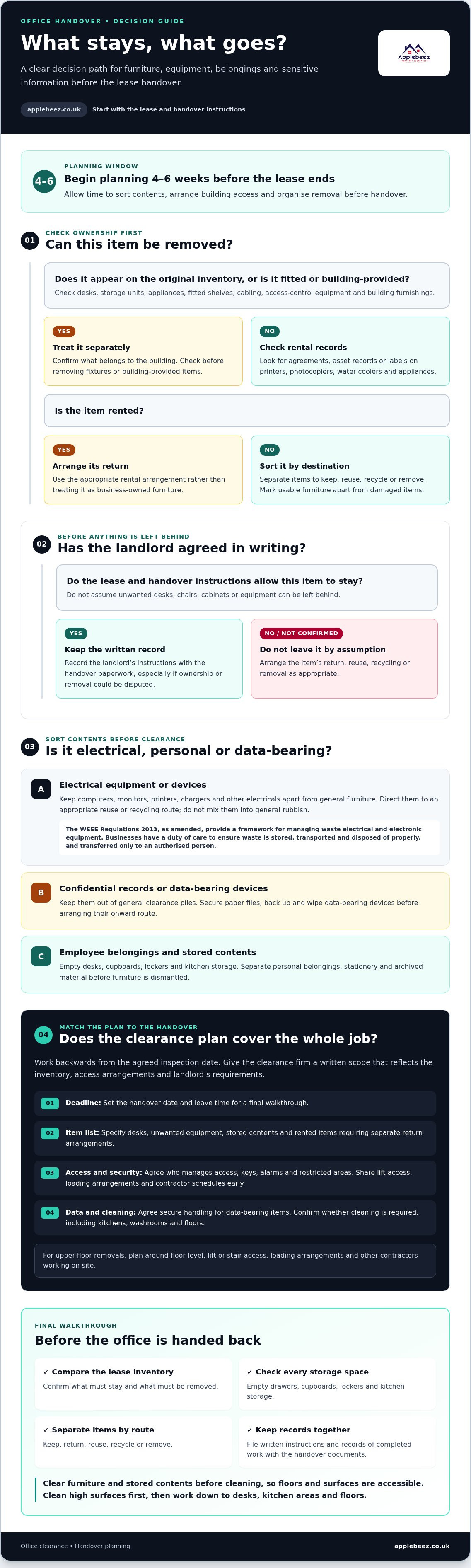
Don’t assume unwanted office furniture can stay after the lease ends. Check the lease and handover instructions, then get the landlord’s agreement in writing before leaving desks, chairs, cabinets or equipment. Some items may belong to the building, while others may be rented or owned by the business.
To clear an office before handover, separate items to keep from those for reuse, recycling or removal. Sort furniture apart from IT equipment and electricals, as each group may need a different onward route.
- Check the lease and inventory. Compare the original inventory with the office now, and identify which desks, storage units or appliances came with the premises.
- Confirm ownership before removing fixtures. Treat fitted shelves, cabling, access-control equipment and building-provided furnishings separately from loose office furniture, as removal could affect the property.
- Identify rented items. Check rental agreements, asset records and labels on photocopiers, printers, water coolers or appliances, so hired equipment can be returned through the right arrangement.
- Empty stored contents. Open desks, cupboards, lockers and kitchen storage, and separate employee belongings, stationery and archived material before furniture is dismantled.
- Separate electricals and devices. Keep computers, monitors, printers, chargers and other electrical equipment apart from general furniture, so they can be directed to an appropriate reuse or recycling route.
- Sort usable furniture for reuse. Mark desks and chairs that remain suitable for use, and keep them separate from damaged items destined for removal.
In the UK, the WEEE Regulations 2013, as amended, provide a framework for managing waste electrical and electronic equipment, according to UK legislation register. This means electrical items shouldn’t simply be treated as ordinary furniture or mixed into general rubbish. The UK Government says businesses have a duty of care to ensure waste is stored, transported and disposed of properly, and transferred only to an authorised person.
How should office furniture and equipment be cleared before handover? First, confirm what must stay, then label items to retain, return, reuse or remove. Empty drawers and cupboards, set electricals aside, and arrange to dismantle large desks or workstations where needed.
How should an office be cleaned before a lease handover? Remove furniture and stored contents first, so floors and surfaces are accessible. Clean high surfaces before working down to desks, kitchen areas and floors. If new furniture or IT equipment is arriving, clean the space before it is brought in.
A short checklist helps prevent missed items: compare the lease inventory, check rental records, empty every storage space, separate electrical equipment, then walk through the cleared office. Keep the landlord’s written instructions with the handover records, especially if ownership or removal status could be disputed.
How Do You Choose the Right Clearance Firm for the Job?
Start with the lease end date, not the first available clearance slot. To clear an office before handover, work backwards from the agreed inspection date. Businesses are advised to begin planning 4-6 weeks before the lease ends. This allows time to sort contents, arrange access and organise removal before handover.
Read the lease alongside the landlord’s instructions. Record what must be removed or left in place, and whether cleaning is required. Note requirements for floors, fixtures, keys, security systems and building access. A written checklist helps match the clearance firm’s proposed work to what’s needed to clear your office before handover.
- Set the handover deadline. Work back from the inspection date and leave time for a final walkthrough.
- List items for removal. Include desks, unwanted equipment, stored contents and rented items needing separate return arrangements.
- Identify security needs. Decide who will manage access, keys, alarms and restricted areas during clearance.
- Plan cleaning separately. Confirm whether the premises need cleaning after removal, including kitchens, washrooms and floors.
- Agree how data-bearing items will be handled. Arrange secure handling for hard drives and devices before they leave the premises.
Ask the firm to set out the work in writing, reflecting your inventory, access arrangements and handover requirements. “Office furniture” may not clarify whether filing cabinets, desk contents or a rented printer are included. Specific descriptions help prevent misunderstandings on clearance day.
Keep lease obligations and the security deposit in mind. If the agreement requires contents to be removed or the office cleaned, unfinished work may lead to a handover dispute. The landlord may arrange removal or cleaning under the lease terms. Keep written instructions and records of completed work together.
Leaving items or waste behind may delay acceptance of the premises or lead to removal and cleaning arrangements under the lease. Unclear responsibility can also prompt disputes about the security deposit and the office’s condition.
Choose a firm whose written plan matches the building’s access rules and your item list. Share loading arrangements, lift access and contractor schedules early, so the work fits the site. For a practical next step, review office clearance planning alongside your lease checklist.
Secure handling of confidential records and data-bearing devices
Keep confidential records and data-bearing devices separate from ordinary clearance items. Before removal, identify sensitive information, secure paper files, and back up and wipe digital data.
There is no single UK GDPR office-closure checklist for every organisation, according to the Information Commissioner’s Office. Your process should reflect the information held, who can access it, and how records must be retained or disposed of.
Start with a room-by-room review. Check filing cabinets, meeting rooms, reception desks and printers for paperwork left behind. Look for personnel files, customer details, financial records, printed emails and handwritten notes. Place confidential material in a controlled area, away from furniture and general waste. Assign a named staff member to oversee the records until their secure disposal is arranged.
- Sort paper records by sensitivity. Separate confidential documents from blank paper and routine office material, so private information cannot be picked up accidentally.
- Check shared spaces. Empty meeting-room drawers, printer trays and cabinets, where visitor lists or printed reports can be overlooked.
- Assess devices before clearance. Identify computers, laptops, phones, servers, removable drives and photocopiers that may hold business information.
- Protect data before devices leave. Back up information the business needs, then arrange secure wiping or disposal through an appropriate route.
- Keep access controlled. Store cleared files and devices in a designated, locked area until the responsible person releases them.
For IT equipment, record each device and its next step. A computer marked for reuse still needs its stored data addressed first. Check removable media too, including USB drives, memory cards and backup discs. Don’t rely on deleting visible files alone; arrange a proper data wipe before reuse or disposal.
Contractors and cleaning teams may need access to offices, cabinets and meeting rooms. Before work starts, remove confidential files from areas being cleared, set boundaries around restricted rooms, and name a staff contact for questions. Explain which items must not be moved. If a cleaner needs access to a locked room, arrange supervised entry rather than leaving keys or records exposed.
What are the UK rules for disposing of confidential documents and IT equipment? Keep confidential records out of ordinary rubbish and arrange secure disposal; back up and wipe data on computers and other devices before their onward route. The WEEE Regulations 2013, as amended, provide a framework for managing waste electrical and electronic equipment, according to UK legislation register.
Finish with a documented check of desks, cabinets, printer areas and meeting rooms. Record which records were securely handled and which devices were backed up and wiped. This audit trail helps staff explain what happened if questions arise during handover.
Can you clear an entire office before handover?
Yes. End-of-lease clearance can cover one room or a complete commercial office. The time required depends on the volume of contents, building access and project complexity. Before setting dates, list the rooms, furniture, fixtures and equipment that need removing.
Access shapes the removal plan, especially above ground level. Clearing furniture from upper floors depends on the floor, lifts, stairs and loading arrangements. A large boardroom table may need dismantling to fit through a corridor or lift. Note narrow doorways, shared routes and fixtures that must remain in place.
Start with the building’s operating rules. Ask the property manager about contractor access, permitted entrances and loading arrangements. Agree where vehicles can load, how the crew will reach the office, and who will provide access. If loading space or a lift must be booked, arrange it for the clearance and share the details with everyone involved.
- Confirm the building access route. Record the entrance, floor, lift or stair route, and any restricted areas.
- Arrange loading access. Coordinate the vehicle location and loading times with the building manager.
- List other contractors. Share planned work with cleaners, IT teams and furniture installers to avoid overlapping access.
- Protect items that stay. Mark retained fixtures, confidential documents and equipment clearly before removal begins.
- Plan the final walkthrough. Check each room, cupboard and shared area after the last items leave.
Vehicle requirements vary with the contents. A small office clearance may require one vehicle, while a larger project could need three Luton van loads or more. Count bulky items such as desks, chairs, storage units and meeting tables, then include boxed contents and electrical equipment in the inventory. This helps the clearance team understand the work and plan loading.
Coordinate the clearance with every contractor working on the move-out. For example, schedule furniture removal before the cleaning team needs clear floors, and keep IT contractors informed before equipment is moved. Separate confidential documents and data-bearing devices from general items so they remain under the right person’s control.
Allow time for a post-clearance walkthrough. Check each floor, room and storage area against the inventory, including kitchens and meeting rooms. Look for remaining chairs, boxes, loose cables and items inside cupboards. A dated record of the cleared space can help document its condition at handover.
For a smoother clearance, give the team the floor plan, access instructions and item list together. Include lift or stair details, loading arrangements, fixtures to retain and other contractors’ schedules. This clarifies the removal sequence and helps prepare the whole office for handover.
Clearing employee belongings and business equipment
A professional office contains more than desks and computers. Personal belongings, shared supplies, business equipment and stored contents can all be mistaken for clearance items. Start with an inventory that records what belongs to the business, what belongs to employees and what must remain for the incoming occupier.
Ask staff to remove personal items before the clearance date. Name a contact for each room or team, and set aside coats, mugs, photographs and personal documents. Keep unclaimed belongings separate from business contents until the responsible manager decides what to do with them.
Use a simple checklist to sort items into clear groups:
- Retain: List furniture, files and equipment moving to another workplace, so they aren’t loaded for removal.
- Employee belongings: Label personal items by owner or team, which helps prevent mix-ups during collection.
- Reuse: Identify usable chairs, desks and cabinets, so they can be offered for continued use.
- Business equipment: Record computers, printers, monitors, phones and other electrical items separately from furniture.
- Stored contents: Check drawers, lockers, cupboards and kitchen storage for supplies or belongings left behind.
- Confidential material: Keep documents and data-bearing devices apart from general office contents until securely handled.
- Building items: Mark fixtures and furnishings supplied with the premises, so they aren’t removed by mistake.
- Unwanted items: Note what needs removal and where it is located, giving the clearance team a clear inventory.
Make the inventory practical for the site. Add each item’s room, status and any handling note. For example, mark a meeting-room table as “retain”, a spare monitor as “business electrical”, and an employee’s labelled box as “personal”. Use consistent labels on the inventory and the items themselves. This gives staff and contractors a shared reference during a commercial clearance.
Before removal begins, have a manager compare the marked items with the inventory. Resolve unclear ownership before anything leaves the office. Keep retained items in a defined area, separate from unwanted contents, and tell employees where to collect their belongings. This final check helps prevent accidental removal and keeps the clearance orderly.
For a workplace with mixed furniture, employee belongings and business equipment, arrange business clearance support around the agreed inventory. A clear list helps distinguish what needs removing from what should stay or be kept for reuse.
Applebeez: House Clearance Service
Applebeez provides a Business Clearance Service for offices with furniture, equipment and other contents to remove before handover. Its Cleaning service can help prepare the cleared space for the landlord’s inspection. These services suit businesses that have agreed what must go, what should remain and when the premises need to be ready.
Share your inventory and handover requirements when arranging the work. Include access details, items to retain, and any confidential documents or data-bearing devices that need separate handling. This gives the clearance plan a clear starting point and helps keep removal and cleaning in sequence.
If you’re preparing a Newcastle office for handover, contact Applebeez or visit applebeez.co.uk to discuss the clearance.
Make the handover your next clear step
A well-planned handover gives your team a clear finish line. Once decisions about belongings and equipment are made, assign someone to oversee the final checks and keep the landlord’s requirements close at hand. Deal with any remaining questions before returning the premises.
If you’re ready to clear your office before handover, Applebeez can help with a Business Clearance Service and Cleaning. Its House Clearance Service is also available for residential properties. Choose the support that fits the property and the work still to be done, then share the handover details to plan the next step.
There’s no need to make the process more complicated than it is. Start with the items and rooms that need attention, and arrange the work around your handover plans. Contact Applebeez about your office clearance to discuss what you need. A practical plan can help you move towards handover with greater confidence.
Frequently Asked Questions
When should I arrange an end-of-lease office clearance?
Begin planning 4-6 weeks before the lease ends. This gives you time to arrange furniture collection, buyer visits and building access without compressing everything into handover week. If staff are leaving at different times, set an internal date for personal belongings to be collected first. Then book the clearance around the landlord’s inspection and any contractors who need access to the premises.
Can IT equipment be included?
Yes, office clearance can include computers, printers, monitors and other IT equipment. Before collection, decide which devices to keep, reuse or remove, and arrange for business data to be backed up and wiped. Check peripherals too, such as docking stations, keyboards and external drives. This helps prevent overlooked equipment or data-bearing accessories being left in desk drawers or meeting rooms.
Can Office Furniture Be Reused or Resold?
Yes, usable office furniture can be reused, donated or resold. Inspect desks, chairs and storage units for damage, missing parts and safe working condition, then photograph items and prepare a clear description for potential buyers. Allow several weeks for finding a buyer, arranging collection and completing a sale. Set aside furniture earmarked for reuse so it is not confused with items for removal.
Do I need documentation for office waste removal?
Keep a waste transfer note or equivalent record for non-hazardous business waste. It should identify the waste collected, the parties involved and the transfer date. According to the Environment Agency, businesses should retain this documentation for two years. File each record with the office’s handover paperwork, and match it to the clearance date and the items transferred.
What should be removed from an office before handing it back?
To clear an office before handover, compare the lease requirements with a room-by-room inventory. Identify furniture, business equipment, employee belongings, stored supplies and waste that must go, while noting fixtures that belong to the building. Check less obvious places, including lockers, printer areas, kitchen cupboards and shared rooms. A final walk-through helps catch anything missed during sorting.
How do you dispose of office furniture and electrical equipment in the UK?
Separate furniture from electrical equipment and identify suitable routes for reuse, recycling or disposal. The WEEE Regulations 2013, as amended, provide a framework for managing waste electrical and electronic equipment, according to UK legislation register. Keep batteries apart from general rubbish, and record waste transfers. For furniture, assess whether each item can be reused before arranging its removal.
What does a commercial lease require when returning office premises?
Requirements depend on the lease wording and any agreed handover terms. Clauses about repair, reinstatement, cleaning and fixtures can affect what must be removed when clearing an office before handover. Compare the inventory with the premises, and note changes made during the tenancy, such as added shelving or cabling. Keep written landlord instructions alongside the lease for the final inspection.
How do you choose a licensed office clearance company in the UK?
Choose a company whose written scope clearly describes the items, access needs and waste arrangements for your premises. Check that it is licensed and insured, and that waste is transferred only to an authorised person. For a Newcastle office, share the inventory, building access rules and items to retain before work begins. Applebeez is fully licensed and insured and provides Business Clearance Services in Newcastle, Sunderland, Stockton-on-Tees, Middlesbrough, Darlington and Durham.


