

A skip bag isn’t always the simplest way to clear a whole home. The main HIPPOBAG alternatives for whole house decluttering are a traditional skip, man-and-van rubbish removal or a house-clearance service. The right option depends on the type and amount of waste, whether bulky items need carrying out, and how much sorting you want to handle yourself.
It’s easy to see the appeal of a bag: you can fill it as you work. But clearing a whole house can mean dealing with heavy furniture, awkward access and belongings that need sorting before removal. A man-and-van collection can carry items out of places such as upstairs flats and back gardens, while a skip gives you a container to load yourself.
This guide compares how each option handles bulky items, loading, recycling, sorting possessions and the possibility of needing several bags. You’ll be able to weigh up what suits your clear-out, whether you’re working in stages or want help removing items from the property.
Key Takeaways
- Match the clearance option to the heaviest items and how they need to be carried out of the property.
- Separate belongings into keep, donate, recycle and dispose groups before removal to make decisions easier.
- Consider how waste will be sorted and handled, especially when different materials need separate treatment.
- Plan the whole-house clear-out by room and consider whether several bags could mean repeated collections and fees.
- Compare self-loading options with removal services by looking at capacity, access and how much work you want to do.
1. Handling heavy and bulky items
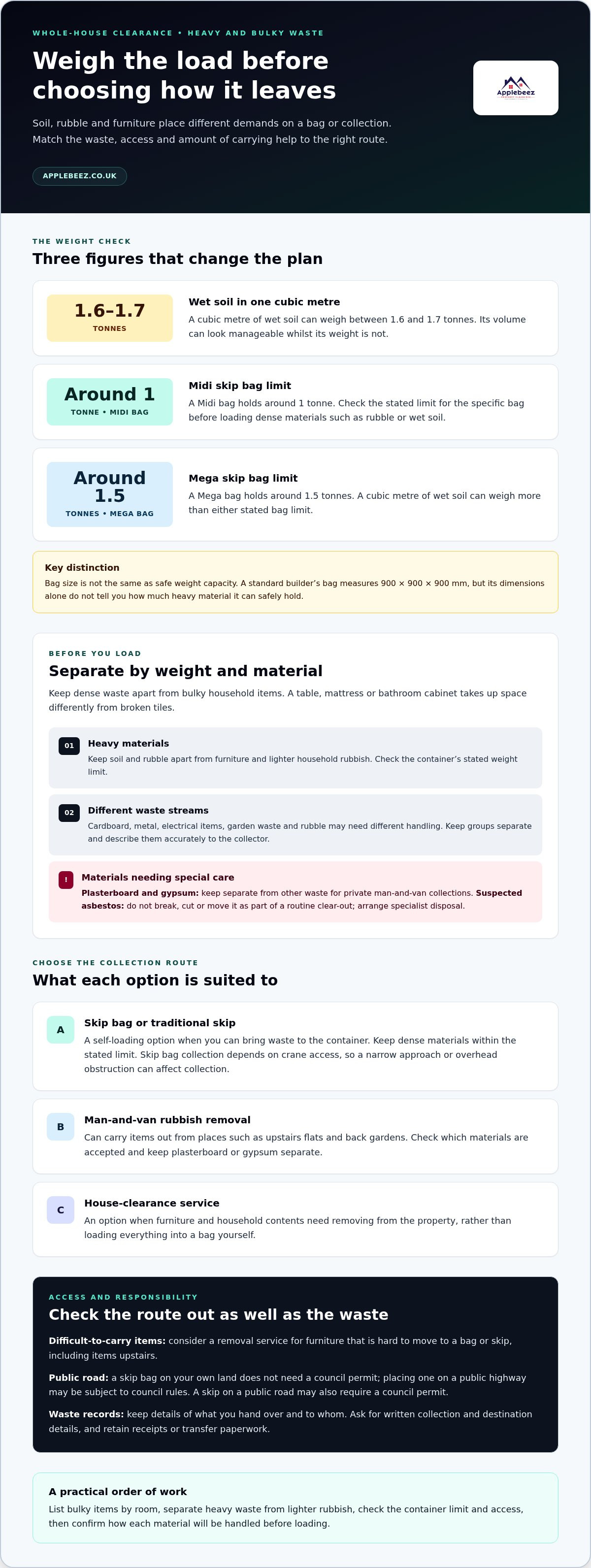
Start by separating heavy waste from furniture and lighter household rubbish. Soil, rubble, wardrobes and appliances place different demands on a skip bag or collection. A cubic metre of wet soil can weigh between 1.6 and 1.7 tonnes. That is heavier than its volume may suggest, so don’t fill a bag with soil before considering its weight.
Skip bags have weight limits that vary by size. A Midi skip bag holds around 1 tonne, whilst a Mega bag holds around 1.5 tonnes. A standard builder’s bag measures 900 × 900 × 900 mm, but its size alone doesn’t tell you how much heavy material it can safely hold. Check the stated limit for the specific bag, particularly for dense loads such as rubble or wet soil.
For a mixed house clear-out, keep soil and rubble apart from bulky household items. A kitchen table, bathroom cabinet or mattress takes up space differently from broken tiles. Grouping materials helps you estimate capacity and avoid filling a bag with dense waste before adding other items. For a large clear-out, list the bulky items in each room before choosing how to collect them.
Do I need a council permit for a skip or skip bag on a public road in the UK? A skip bag on your own land doesn’t need a council permit, but placing one on a public highway may be subject to council rules. A skip on a public road may also require a council permit.
Which UK services collect bulky household items and furniture from inside the home? Man-and-van rubbish removal can carry items out of places such as upstairs flats and back gardens. A house-clearance service is another option when furniture and household contents need removing from a property.
Consider access as well as weight. Skip bag collection depends on crane access, so a narrow approach or overhead obstruction can affect collection. A man-and-van service can suit items that are difficult to move to a bag or skip, including furniture upstairs. Before loading, keep walkways clear and group items by material. This makes heavy objects easier to identify and helps stop lighter rubbish hiding them.
Waste disposal also carries a duty of care. UK local councils state that an amount specified by the English waste collection authority’s authorised officer is not less than £150 and not more than £5,000. Keep heavy loads within the relevant container limit and choose a collection route that suits the material and access.
3. Recycling and environmental considerations
Sort materials before choosing a collection method. Cardboard, metal, electrical items, garden waste and rubble may need different handling. Keeping these groups separate makes it easier to describe the waste accurately and avoid mixing materials that require separate treatment. Use labelled spaces indoors or in the garden, away from windows, doorways and routes people need to use.
Plasterboard and gypsum need particular care. Private man-and-van waste collectors require them to be kept separate from other waste. Don’t bury offcuts beneath general rubbish or mix them with rubble. Set them aside clearly and arrange collection in a way that keeps the material separate. This helps prevent a mixed load from becoming harder to sort.
Asbestos is different from ordinary household waste. It must go through a specialist for hazardous or clinical waste, rather than into a skip bag. Don’t break, cut or move suspected asbestos as part of a routine clear-out. Keep it apart from other materials and arrange specialist disposal. This applies even if it looks like a small piece among renovation debris.
Householders’ waste duty of care is set out in Section 34 of the Environmental Protection Act 1990, according to The National Archives. For a clear-out, keep a record of what you hand over and to whom. Ask for written details of the collection and destination, and retain receipts or transfer paperwork. These records help show how the waste left your property.
What waste items are prohibited or charged extra by skip bag and waste collection companies? Asbestos must not go in a skip bag, and plasterboard or gypsum must be separated for private man-and-van collections. Check the accepted-waste list for your chosen collection method before loading, especially for mixed renovation waste, electrical items and garden materials.
How do I choose a licensed waste carrier for a whole-house clear-out in the UK? Look for an active waste-carrier registration, then compare the materials accepted and how separate waste streams will be handled. Keep the carrier’s details and collection paperwork with your clear-out records.
Plan collection around the type and volume of each material, not just the available space in a bag. A small amount of rubble can take up little room yet add considerable weight, while flattened cardboard occupies less volume. Keep reusable items apart from waste, and avoid leaving materials where rain from an open window could soak paper or cardboard before collection.
If separate waste streams and belongings across several rooms make the clear-out difficult to organise, Applebeez’s house clearance service is a practical next step for a property clearance.
4. Sorting possessions for keeping, donation, recycling or disposal
Begin with one room, then sort its contents into four clear groups: keep, donate, recycle and dispose. A labelled box or marked floor space for each category keeps decisions visible. Start with straightforward items, such as a working lamp you use regularly or an empty cardboard box. Leave sentimental belongings until you’ve found a steady rhythm.
For each item, ask whether it is useful, wanted or in good condition. Put everyday kitchenware you use in the keep group, and set aside duplicate mugs for donation or sale. Charities, apps, social sites and websites can help pass on unwanted possessions. Keep items intended for someone else separate from the disposal pile so they don’t accidentally end up in a collection.
Treat recycling as a separate decision, not just a smaller disposal pile. Separate clean cardboard, metal and electrical items where suitable collection routes exist. Keep materials distinct and check which items your chosen removal method accepts. This matters in a whole-house clear-out, where contents can include furniture, packaging and household appliances.
- Keep: Return useful belongings to a set place, such as daily-use pans in one kitchen cupboard.
- Donate or sell: Group clean, usable items together, such as books, tableware or an unwanted chair.
- Recycle: Separate materials that have an appropriate recycling route, rather than mixing them with general rubbish.
- Dispose: Collect items with no reuse or recycling route in one designated area for removal.
Work in short sessions to reduce decision fatigue. Set a 20-to-30-minute timer, finish one cupboard, then pause before starting another. This gives each space a clear stopping point and helps prevent half-sorted piles spreading through the house. Mark boxes with both the room and category, such as “spare room, donate”, so they remain easy to identify.
Before arranging collection, review each group separately. Check that belongings marked to keep aren’t mixed with items for disposal, and keep donations accessible for their next step. For bulky furniture, note whether each item is being kept, passed on or removed. This helps you estimate the waste for collection without counting reusable possessions as rubbish.
A whole house can produce several tonnes of material, but the total depends on what is there and what can be reused. Sorting first gives you a clearer picture of the remaining waste, its mix and the space it may need. You can then decide whether a bag collection suits the disposal pile or another clearance method better fits the items.
5. Whole-house decluttering and multiple bags
A full-house clear-out produces different waste from room to room. A spare bedroom may contain cardboard and textiles, while a kitchen can include cupboards, packaging and a fridge. Garden waste adds another stream. Estimate each area separately before choosing how to collect the rubbish, and keep reusable belongings out of the disposal pile.
How much waste can different skip bag and skip sizes hold? A 4-yard skip holds around 40 to 45 rubble sacks, more than twice the capacity of the largest Hippo bag. A 6-yard builder’s skip holds about 60 to 65 rubble sacks, whilst traditional skips commonly range from 4 to 12 cubic yards and can hold up to 8 to 10 tonnes.
Capacity is only one part of the decision. A house may need several skip bags, which can mean several collection fees. A larger skip can take more waste in one container but needs suitable space and access. Bulky furniture may fill a bag quickly, while broken-down boxes take up less room. Separate heavy materials from lighter household rubbish before estimating how many containers you need.
For a staged clear-out, plan around rooms and collection points. Start with one area, sort its contents, then assess the remaining waste before filling a container. Keep each collection load together and avoid ordering a new bag for every small room. If the first stage reveals more rubbish than expected, revise your plan before arranging the next collection.
What is the most cost-effective way to declutter a whole house in stages? Sort items for keeping, donation, recycling and disposal first, then group the remaining waste into fewer, fuller collections where practical. The main cost factors are the amount and type of waste, container capacity, access and the number of collections required.
Use a simple room list to keep the work moving:
- Living room: Separate reusable furniture from broken items and packaging.
- Kitchen: Keep appliances, cupboards and general rubbish in distinct groups.
- Bedrooms: Sort clothing and bedding before estimating the remaining waste.
- Garden: Keep garden waste apart from household items and rubble.
Once the groups are clear, compare their combined volume with the capacity of a bag or skip. A skip bag can suit a smaller, lighter stage, while a skip may take a larger volume in one container. If access is restricted or items need carrying out from different rooms, a house-clearance service may suit the whole job better than repeated self-loading collections.
When dealing with lighter materials, skip bags make a practical alternative to traditional skips. They can be particularly useful when a clear-out leaves a smaller, lighter group of items alongside heavier waste. Keep those materials separate while sorting, then consider whether a skip bag is suitable for collecting them rather than adding them to a traditional skip. Base your choice on the waste you’ve grouped and your overall collection plan.
As you work through each room, reassess the mix of materials before arranging collection. Keeping lighter items together can help you compare container options while accounting for heavier waste that may need separate handling.
5. How do skip hire, man-and-van clearance, and rubbish removal services compare with HIPPOBAG?
A HIPPOBAG-style skip bag gives you a container to fill yourself, often in stages. It can suit lighter household waste when you have space to load it and collection access is straightforward. Collection depends on crane access, so a narrow street, parked cars or overhead obstacles can affect whether the bag can be lifted away.
For readers weighing up HIPPOBAG alternatives for whole house decluttering, a traditional skip offers a different balance. UK skips typically range from 4 to 12 cubic yards and can hold up to 8 to 10 tonnes. Hire periods are often 1 to 2 weeks, giving you time to load waste as you clear rooms. The trade-off is that you do the lifting and loading, and the skip needs a suitable place to stand.
Man-and-van rubbish removal can help when waste is inside the property. A collection can carry items out of upstairs flats or back gardens, rather than relying on a crane to reach a bag. This can be a practical option for a sofa upstairs, an old wardrobe or mixed items gathered across several rooms.
“Rubbish removal” can describe different collection arrangements, so focus on the work involved. With a skip or bag, you do the loading; a man-and-van collection can remove items from the property. When comparing HIPPOBAG alternatives for whole house decluttering, consider whether you need a container, help carrying bulky belongings or removal of mixed contents.
- Choose a skip bag for lighter waste you can load yourself, with suitable collection access.
- Choose a skip when a larger container and a set loading period suit the clear-out.
- Choose man-and-van removal when bulky items need carrying out from rooms, stairs or a back garden.
Before deciding, list the waste types, the heaviest objects and where they are located. A dismantled bookcase by the front door is easier to load than a wardrobe upstairs. Note whether waste is ready at one collection point or spread through the house. That distinction affects how much lifting you’ll need to do and whether a container-based option fits.
For several rooms of mixed belongings, compare the effort of loading each bag with having items carried out. If you’re clearing a property and would rather discuss the work as a whole, get help planning a whole-house clear-out.
Cost can also affect your choice. For heavier items such as furniture or appliances, a man-and-van rubbish removal service is recommended.
For smaller commercial clearance projects, using bags could cut waste costs compared with hiring multiple small skips. If a skip must go on a public road, a UK council permit can add from £30 to over £100 to the final cost, depending on the local authority. These charges may affect whether a skip suits your location and budget.
Applebeez: House Clearance Service
Applebeez offers a House Clearance Service for people clearing a home when bags or a skip leave too much sorting and lifting to manage alone. The service removes household contents as part of a property clear-out, including probate clearances for executors handling a relative’s belongings. Cleaning is also available when the property needs attention after clearance.
A house clearance may suit you when items are spread across several rooms, bulky belongings need removing or you’d prefer support with the whole property instead of arranging repeated collections. Decide what to keep or set aside before the clearance so important possessions remain separate.
For a house clear-out in the North East, contact Applebeez to discuss the property and the help you need.
Choose a clear-out plan that suits your next step
The most practical choice is the one that matches how involved you want to be. If you’re comparing HIPPOBAG alternatives for whole house decluttering, decide whether you want to load a container yourself or have help clearing the property. Set aside belongings to keep before arranging the remaining work.
For a property with items spread across several rooms, a house-clearance service can bring the clear-out together. Applebeez also offers business clearance and cleaning to suit different property needs. A clear list of what should stay, what should go and any areas needing attention gives you a practical starting point.
You don’t need to settle every decision at once. Begin with the items and rooms that are easiest to assess, then take the next step when you’re ready. To discuss your clear-out, contact Applebeez about your property.


