

Clearing a probate property before a Grant of Probate is granted can create problems for beneficiaries and affect estate valuations. In most cases, clearance follows the valuation and the grant. Early removal may be appropriate in limited circumstances, such as when no grant is needed or beneficiaries agree. When comparing probate clearance options, consider not only who will remove belongings, but how they will handle documents, photographs and valuable items.
It’s understandable to want practical work dealt with promptly, especially when a property holds years of personal belongings. This guide explains what probate clearance involves, why timing matters and how to protect important papers and photographs before anything is removed. It also compares professional clearance with informal help, so you can weigh the level of care and practical support the estate needs.
Key Takeaways
- Before anything is cleared, set aside and label important papers, photographs and belongings that may need to be valued or shared with beneficiaries.
- Keep a record of items and decisions, especially when several family members are involved, to help avoid confusion later.
- Consider whether informal help can manage the clearance respectfully and dispose of waste appropriately, or whether a professional service better suits the property and circumstances.
- Consider waiting until the estate’s affairs are clearer before clearing the property, as removing belongings too soon may affect the process.
Handling and returning personal documents and photographs
Set aside valuables, personal papers and belongings the family wants to keep before clearance begins. The executor can label each item with its intended recipient or agreed destination, then keep it separate from items to be removed. This makes the key steps clear: preserve documents and photographs, record valuable items, and arrange for family belongings to be returned before clearance.
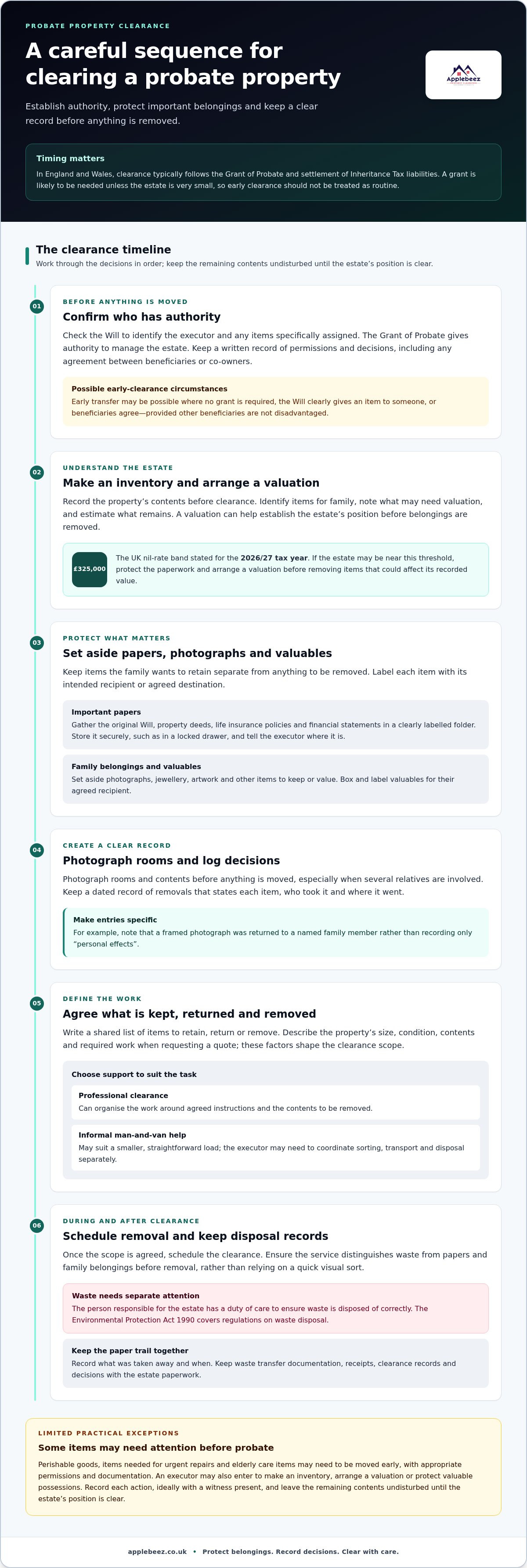
Gather the original Will, property deeds, life insurance policies and financial statements into a clearly labelled folder. Keep it somewhere secure, such as a locked drawer, and tell the executor where it is. Solicitors may need these papers, while bank statements and policy documents can help clarify the deceased’s financial affairs. The Inheritance Tax Act 1984 is relevant to understanding tax implications on an estate, according to The National Archives (legislation.gov.uk). HM Revenue & Customs states that the UK nil-rate band is £325,000 for the 2026/27 tax year. Where the estate may be near that threshold, protect paperwork and arrange a valuation before removing items that could affect its recorded value.
Photograph rooms and contents before anything is moved, especially if several relatives are involved. Keep a dated record of removals, noting each item, who took it and where it went. For example, record that a framed photograph was returned to a named family member, rather than writing only “personal effects”. Box and label jewellery, artwork and other valuables for the agreed recipient. This record can reduce misunderstandings and make later decisions easier to explain.
Waste needs separate attention. The person responsible for the estate has a duty of care to ensure it is disposed of correctly, and the Environmental Protection Act 1990 covers regulations on waste disposal. Keep any waste transfer documentation, receipts and clearance records with the estate paperwork. Record what was taken away and when; this creates a clearer trail if disposal decisions are questioned. A clearance service should distinguish waste from papers and family belongings before removal, rather than relying on a quick visual sort. That care can ease the executor’s burden without putting important records at risk.
Comparing professional clearances with informal man-and-van services
Both professional clearance and informal help can remove household contents, but they differ in how the work is organised and recorded. For probate house clearance, weigh the estate’s needs alongside the practical task of dealing with belongings.
Clearance Costs and Price Factors
Probate clearance costs depend on the work involved in removing and handling the property’s contents. Property size, condition, volume of contents and types of items all affect the scope. An empty, orderly home presents a different clearance task from a crowded property with mixed items, so a clear description of the rooms and contents helps define the work.
Risks When Hiring a Clearance Company
Hiring a clearance company means giving a team access to a deceased person’s home and possessions. Executors should consider how the team will distinguish belongings for beneficiaries from items to remove, and how decisions will be recorded. Unclear instructions can lead to disputes or missing items. Agreeing the scope and setting aside personal belongings before work begins gives the team a clear boundary to follow.
Arranging probate property clearance usually begins with an inventory and valuation, followed by identifying items for family and estimating what remains. When requesting a quote, the executor can describe the property’s contents, condition and required work. Once the scope is agreed, the clearance is scheduled and the remaining items are removed. Keep records of decisions and disposal documents with the estate paperwork.
A professional clearance service can organise the work around agreed instructions and the contents to be removed. Informal man-and-van help may suit a smaller, straightforward load, but the executor may need to coordinate sorting, transport and disposal separately. Either way, make a written list of items to retain, return or remove. It gives family members a shared reference and reduces uncertainty about what happened to personal belongings.
If you’re considering professional support, explore probate property clearance as one option for managing the practical work.
Some house-clearance companies offer probate-sensitive services for families dealing with an emotional situation.
Clearing a property before probate is granted
In England and Wales, executors typically begin house clearance after probate is granted and Inheritance Tax liabilities are settled. The executor named in the Will usually has authority to deal with possessions, while the Grant of Probate gives authority to manage the estate. A grant is likely to be needed unless the estate is very small, so don’t treat early clearance as routine.
Before removing anything, establish who has authority and what the estate requires. The Will identifies the executor and may explicitly assign particular assets. Where no grant is required, or the Will clearly gives an item to someone, early transfer may be possible if it doesn’t disadvantage other beneficiaries. Agreement between beneficiaries or co-owners can also matter. Keep a written record of permissions and decisions.
There are practical exceptions. Perishable goods, items needed for urgent repairs and elderly care items may need to be moved before probate, with appropriate permissions and documentation. An executor may also enter the property to make an inventory, arrange a valuation or protect valuable possessions. Record each action, ideally with a witness present, and leave the remaining contents undisturbed until the estate’s position is clear.
Early removal can affect beneficiaries’ rights and the estate’s valuation for tax purposes. It may prompt disputes, delay administration or lead to accusations of misappropriation. In serious cases, unauthorised removal may be treated as theft. Removing goods can also affect property insurance or make it harder for the estate administrator to account for belongings. These risks can add difficulty to an already challenging process.
The practical takeaway is to separate preservation from clearance. Secure the property, document any urgent move and, in most cases, wait for the grant before arranging a general clearance. Set aside jewellery, artwork, rare books and antique furniture for valuation before transfer or disposal. If it’s unclear whether an item can be moved, seek legal advice before acting. Careful handling of every possession respects both the deceased and the beneficiaries.
What probate property cleanout services do UK clearance companies provide?
Probate clearance can involve identifying belongings and removing agreed contents. Some companies may also itemise, value or sell items from a deceased person’s property. This work can help prepare a home for sale or occupation by beneficiaries. The executor’s instructions and the property’s contents determine the scope, so distinguish items to keep, distribute or clear before work begins.
An itemised approach gives the executor a clearer account of what is in the property. Furniture, household goods and personal effects can be recorded separately, with valuable items identified for valuation before any sale or removal. This helps beneficiaries understand what remains in the estate. When considering alternative providers for probate property cleanouts, assess whether the service’s approach suits the property and the executor’s instructions.
Some contents may be suitable for donation rather than disposal. Furniture is generally considered for charity donation when it is in good condition and has the correct fire labels. A sofa without the required labels may not qualify, even if it appears usable. Sorting items by condition and checking labels helps avoid assuming every piece of furniture can be passed on. This can help families assess alternative providers for probate property cleanouts against the estate’s needs.
The property’s condition also affects the work involved. A tidy, organised home is generally easier to clear than a neglected one. Hoarded contents can take longer to sort and remove, and may require specialist equipment. Once unwanted items are cleared, preparing the property for sale or beneficiary occupation may involve separate cleaning or presentation work. Agreeing which tasks are needed helps define the clearance scope.
For a probate property that needs organised removal of agreed contents, arrange a probate clearance to discuss the practical work.
A clearance involving hoarded items may take longer and require specialist equipment. This possibility matters when defining the practical scope of the work. The time and equipment needed depend partly on the property’s condition, so describe it clearly when discussing the clearance.
Applebeez: House Clearance Service
Applebeez provides probate clearance for executors who need practical help clearing a deceased person’s property once belongings have been identified and set aside. Its House Clearance Service covers the removal of household contents, while Cleaning can help prepare a cleared property for its next use. The right support depends on what remains and what the executor needs done.
For probate properties in Sunderland, Newcastle, Stockton-on-Tees, Middlesbrough, Darlington and Durham, Applebeez can handle the physical clearance work, helping ease the burden on family members. Clear instructions about items to retain, distribute or remove help define the task and keep decisions organised.
To discuss a probate clearance, contact Applebeez or visit applebeez.co.uk.
Choose a considerate next step
Once the family has agreed what should happen to the property, decide how much practical work to take on yourselves. Focus on the support that suits the estate, the home’s condition and the time family members can give. A clear plan can make the transition more manageable while leaving space to deal with personal belongings at an appropriate pace.
You don’t need to settle every detail at once. Identify the tasks still outstanding, such as clearing household contents or preparing the property for its next use. Then choose support that fits those tasks and keeps the process straightforward. A considered choice can help you move forward without losing sight of the family’s needs.
Applebeez offers house clearance, business clearance and cleaning services. If practical support would help with the next stage, contact Applebeez about a clearance. Take that step when you’re ready, with a plan that respects both the property and the people connected to it.
Frequently Asked Questions
What is Probate Clearance?
Probate clearance is a property service that removes agreed belongings from a deceased person’s home. It is separate from obtaining a Grant of Probate. The work can help prepare a property for sale or occupation once the executor has decided what should happen to its contents. In Newcastle, Sunderland, Stockton-on-Tees, Middlesbrough, Darlington and Durham, executors can turn to Applebeez for probate clearance to manage the physical work alongside their estate responsibilities.


